




Your CFO approved the AI budget six months ago. Your team evaluated vendors for eight weeks. Implementation kicked off last quarter. And today, your underwriters are still manually keying data from ACORD applications into the same system they were using before the project started. The invoices keep coming. The ROI deck stays blank.
This is the reality for a lot of insurance AI projects. The technology works. The timeline doesn’t. And the gap between "signed contract" and "measurable results" is where many initiatives quietly die.
For many insurance AI projects, time-to-value runs 12 to 18 months. Purpose-built platforms designed specifically for insurance, however, can reach production in 8 to 12 weeks. What separates the projects that deliver in weeks from the ones that stall for months comes down almost entirely to what kind of AI you’re deploying and who’s deploying it
The Typical Insurance AI Project Timeline
For most teams, that 12 to 18 months breaks down roughly like this: two to three months evaluating vendors, another two getting data ready, several more on model training and integration, then UAT and rework before anything goes live.
A Gallagher survey found that insurers measuring AI ROI expect it to take an average of 28 months to recover their upfront investment. For insurers and MGAs running lean teams, that timeline is painful.
Every month without results is another month of manual processing, another month of experienced underwriters spending 40% of their day on data entry instead of risk evaluation, another month of claims adjusters toggling between seven screens to process a single FNOL.
Seven Factors That Drive Insurance AI Timelines
Each of these seven factors has a direct impact on how long an insurance AI project takes to deliver value. Knowing them early will save you months.
-
Scope
Trying to deploy AI across underwriting, claims, and servicing simultaneously fragments attention, multiplies integration complexity, and makes it nearly impossible to measure what’s working. Start narrow. Pick one document-heavy, high-volume use case, prove it out, and expand from there.
-
Purpose-Built vs. Generic AI
Every week spent teaching a general-purpose model what multi-year large loss runs look like is a week an insurance-trained model would have spent processing live documents. Generic platforms require months of fine-tuning before they can handle vocabulary and document structures that are routine in insurance workflows.
-
Data Readiness
Even purpose-built insurance AI needs clean, accessible data. Many projects stall not because the model can’t handle the data, but because it’s locked in systems that weren’t set up for extraction, inconsistently formatted, or incomplete. A data readiness check before deployment starts prevents months of mid-project delays.
-
Integration
Integration is where many projects quietly stall. Vendors that connect through standard APIs move faster than those that require custom middleware and put less burden on your IT team.
-
Success Metrics
If you haven’t defined what “value” means before the project starts, you won’t recognize it when it arrives. Without a clear metric like processing speed, extraction accuracy, or reduction in touch points, teams optimize for the wrong things and leadership loses confidence.
-
User Adoption
AI that goes live but doesn't get used delivers the same ROI as AI that never went live. When AI and human-in-the-loop (HITL) review aren't integrated naturally into existing workflows, teams work around them rather than with them. Treat adoption as part of the deployment. Involve underwriters and adjusters early, set clear expectations, and build confidence through transparency, not just accuracy scores.
-
Governance
AI projects may look complete on the surface but still might not be production-ready. Without HITL review, confidence scoring, and audit trails built in from the start, the AI can’t operate in a regulated environment.
Every one of these factors is addressable before deployment begins. What gets decided upfront determines more about the timeline than anything that happens once the project begins.
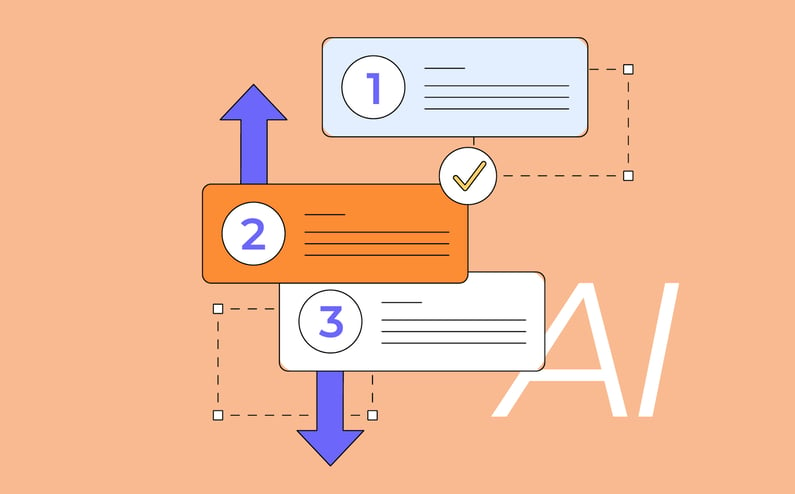
What a Fast Insurance AI Deployment Looks Like
When the scope is right and the AI is built specifically for insurance workflows, the timeline compresses dramatically. A well-run deployment moves through three phases:
Phase 1: The workflow is scoped and the AI is configured for your specific document types and processes.
Phase 2: The AI agent connects to your systems through standard APIs and moves into staging.
Phase 3: The deployment goes live in production. HITL review handles low-confidence items while the models learn from real data, and straight-through processing rates climb from there.
Most deployments complete all three phases in 8 to 12 weeks. By the 90-day mark, measurable results become visible. Teams that start with a well-scoped, document-heavy workflow typically see processing times drop significantly, extraction accuracy hold at 98% or higher, and a meaningful reduction in manual review items, freeing underwriters and adjusters to focus on judgment-intensive work.
Time-to-value in insurance AI is more predictable than it appears. The factors that determine it are known, they're addressable, and most of them belong at the beginning of the process. What gets decided before a model goes live shapes how quickly results follow.
Start there and the path to measurable results gets significantly shorter. For insurers and MGAs willing to do that work upfront, a deployment measured in weeks rather than months isn't an ambitious target. It's what good groundwork produces.
