

The Situation
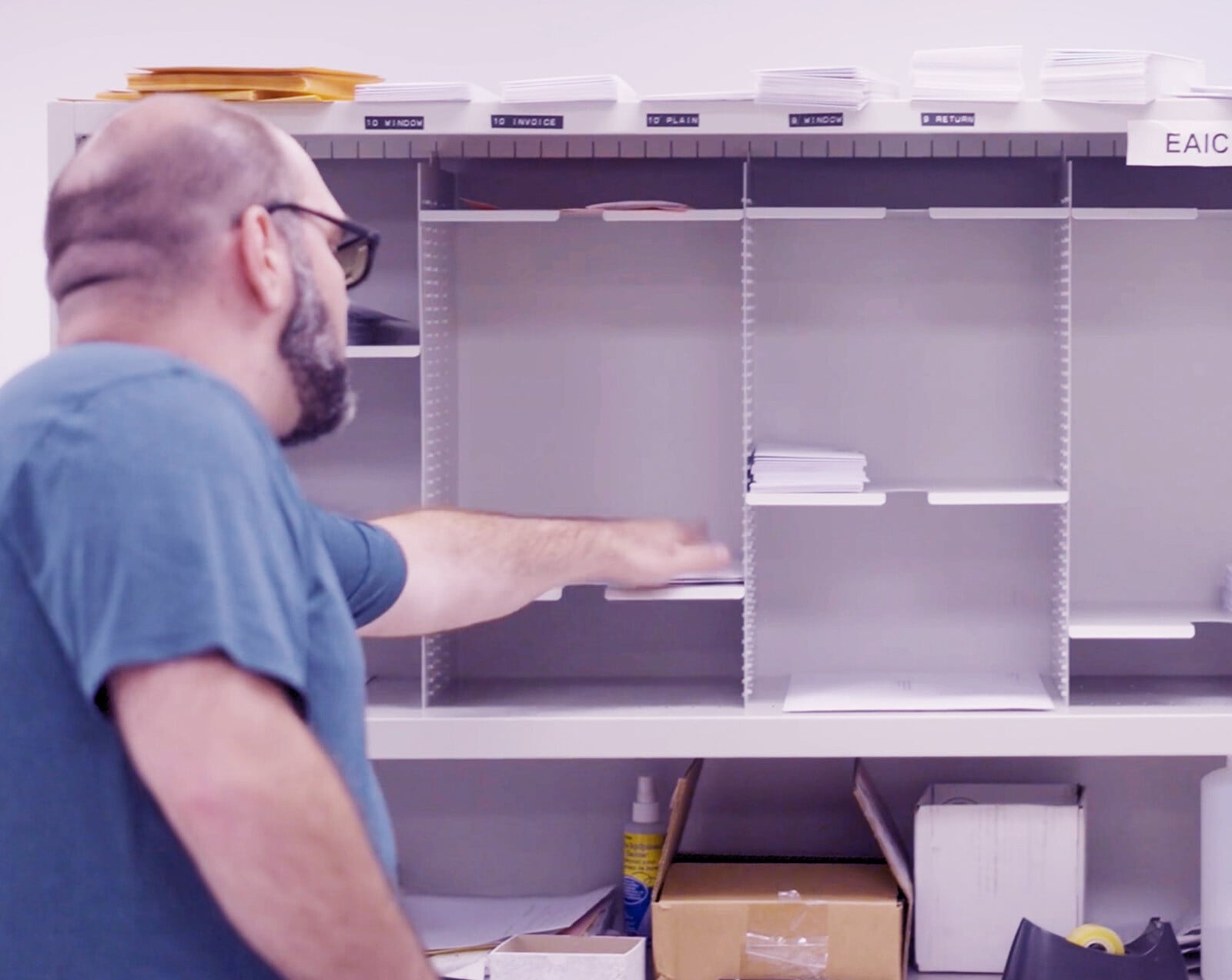
A regional non-standard auto insurance carrier sought to grow their business without adding headcount. Efforts at attaining this goal were hamstrung by their claims teams’ dependence on outdated, manual processes. This approach created significant bottlenecks. It soon became apparent that solving the problem demanded nothing short of a critical operational overhaul.
The Challenge
A full-time team of nine people indexed approximately 250,000 documents annually. The work was prone to inconsistencies, leading to 40% of incoming documents being miscategorized as ‘miscellaneous’, causing adjusters to miss relevant files. The added burden of manual rework prevented the team from meeting its service-level agreements (SLAs).
These inefficiencies created a substantial drain on resources, with claims adjusters spending an estimated 20-40% of their time on indexing activities alone. The reliance on manual work limited team capacity to handle high-volume periods (e.g., CAT season). It also left unaddressed the issue of unindexed non-CAT documents left piling up in adjusters' inboxes.
The Solution
The carrier deployed Bevaya's Claims Indexing AI Agent solution, which leverages AI and large language models (LLMs) to quickly and accurately automate and standardize claims document indexing. Their AI Agent began by retrieving documents from various sources, like multiple inboxes and SFTP folders, before classifying and extracting key data points. The Bevaya solution was fine-tuned with the carrier’s claim documents to ensure highly accurate processing of their files.
Bevaya's patented human-in-the-loop (HITL) functionality flagged documents not meeting the carrier’s confidence thresholds for review by human experts. This not only ensures accuracy but also allows the AI models to learn from human feedback to continually improve overall accuracy and reduce exceptions. Partnering with Bevaya enabled the carrier to handle large volumes of diverse and complex document types, including emails, correspondence, ACORD forms, photos, and even handwritten notes.
The Impact
Working with a Bevaya AI agent, the carrier has seen strong improvement in their claims indexing automation:
- 88% No-Touch Rate: Shortly after deploying their Bevaya Claims Indexing AI Agent, the carrier processed 7,500 total documents – 6,600 automatically without human intervention – resulting in an 88% no-touch rate.
- Manual Effort Reduction: The team of nine full-time employees previously dedicated to indexing were free to engage in higher-value claims activities.
- Greater Document Classification Consistency: All automated documents are now properly classified – with the carrier’s document classification schema streamlined from approximately 70 document categories to less than 60.
- Data Accuracy: The system was trained on annotated data to achieve a 90%+ accuracy rate extracting data from the carrier’s claims documents.
- Scalability: The Bevaya AI agent enabled the carrier to grow its business without 1headcount or resort to BPO solutions – even during high-volume periods.
- Turnaround Time: Automating claims indexing with Bevaya lets the carrier’s teams meet or beat their one-day service-level agreement, making missed SLAs a thing of the past.
Conclusion
After deploying their Bevaya AI agent, the carrier’s claims department was transformed into a model of efficiency and accuracy. By automating the classification of thousands of documents, the company established standardized processes that are scalable, consistent, and resilient – and freed their adjusters to focus on creating an outstanding customer experience. Working with Bevaya, the carrier built a strategic partnership that yielded a turnkey technical solution with robust human in the loop functionality, ensuring rapid time to value and a clear path to growth without additional headcount.
Frequently asked questions
What does a Claims Indexing AI Agent do?
It retrieves documents from sources like multiple inboxes and SFTP folders, then classifies them and extracts key data points. Documents that don't meet the carrier's confidence thresholds are flagged for human review, and the AI models learn from that feedback.
What results did the regional carrier see?
Shortly after deployment, the carrier processed 7,500 documents, 6,600 of them with no human intervention, for an 88% no-touch rate. It reached 90%+ data extraction accuracy and now meets or beats its one-day SLA.
What types of claims documents can it handle?
Emails, correspondence, ACORD forms, photos and even handwritten notes.