
Customer Story
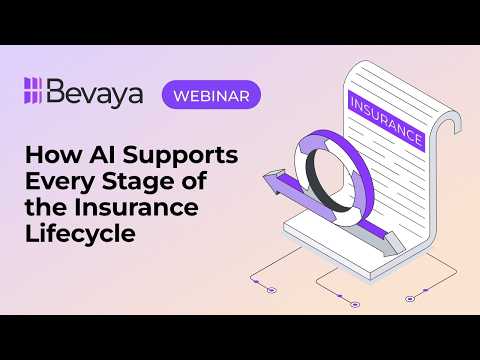
Three categories and three questions for deciding where AI runs the work, where it assists, and where your team keeps it.
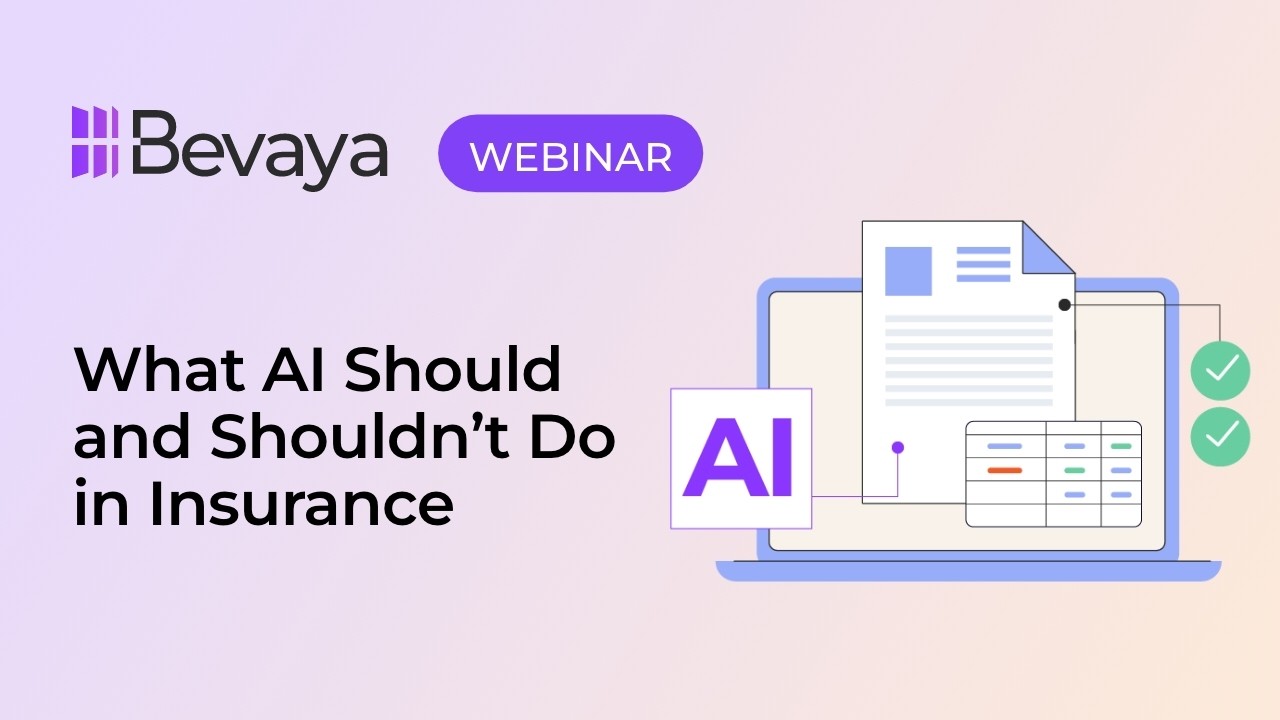
Put AI where it belongs, and your team gets back to the work it was hired to do. Chaz Perera, our Co-Founder and CEO, shows exactly how to draw the line.
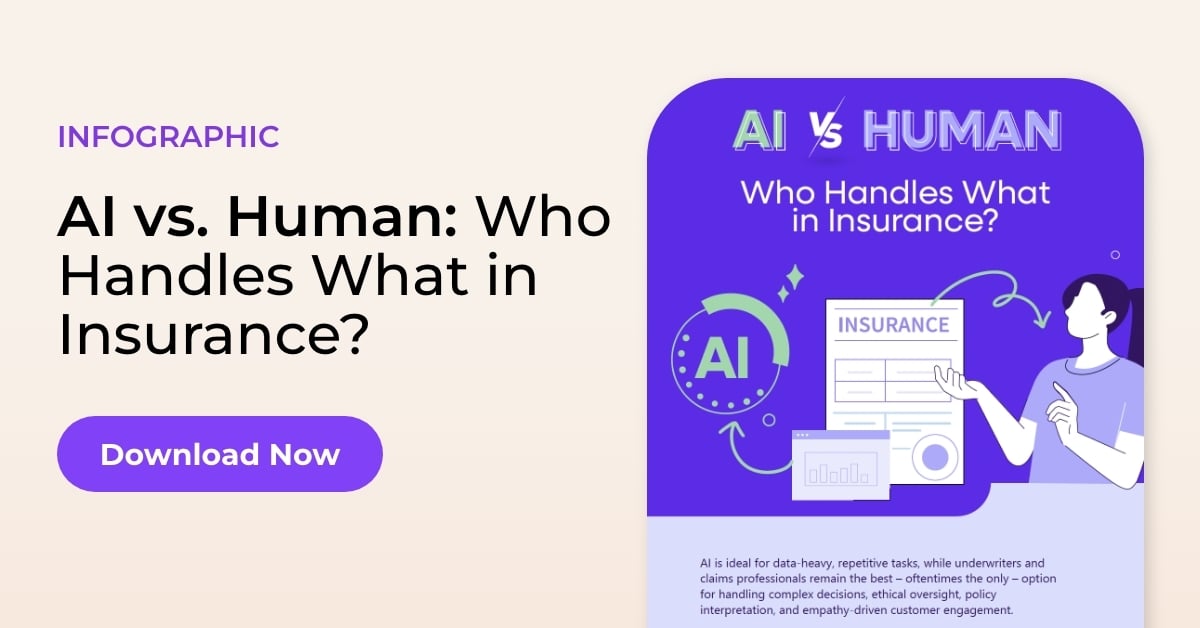
Every task in an insurance operation fits one of three categories. AI runs it: submission intake, loss run processing, ACORD form extraction, claims indexing, FNOL setup, and COI creation, fully automated with exceptions routed out. AI assists: policy-to-policy comparison, claim-to-policy comparison, claim file summarization, endorsement processing, and premium audit, where AI does the analysis and a person makes the call. The team keeps it: regulatory sign-offs, broker and policyholder relationships, edge cases, and strategic judgment on coverage, reserving, and pricing.
Why it matters. Drawing the line in the right place protects accuracy, cycle times, compliance, and your team's trust in the system. Three questions sort any workflow step by step: is the output rule based or judgment based, what does a wrong answer cost, and how often does the work happen. Chaz closes with five steps to get started.
AI runs it, AI assists, or the team keeps it.
Loss runs, ACORD forms, claims indexing, FNOL setup, and COI creation run end to end.
Regulatory sign-offs, broker relationships, edge cases, and strategic calls stay with people.
High-cost, hard-to-reverse steps get a human review built in.
Chaz Perera, BevayaAppreciate the opportunity to speak with all of you today. What we often hear from insurers is that at this point they know they need to do something with AI, and according to our "State of AI Adoption in Insurance 2026" report which we released a couple of months ago, 93% of insurers are actively using exploring or implementing AI. So the industry is moving. The question most operations are really wrestling with right now, is where exactly to put it.
Which parts of the of your workflow should own AI? Which parts should stay with your team, your humans? And what happens when you get that wrong? So that's what we're going to cover today.
We're going to walk through the three ways to divide the work, show how to audit your own operation, and leave you with a clear starting point. All right, I want to start with why AI belongs in insurance in the first place. Because this isn't about replacing what your team does. It's about making sure they're spending their time on the right parts of the work.
You and your team were hired to make decisions. Coverage calls, risk assessments, claim judgments. That's the work that requires people. That's what they are, we are all good at.
That's what the business is really depending on you, the team getting right. But ask any adjuster or underwriter how much of their day is actually spent making decisions. The honest answer is not enough. Most of their time goes to everything that comes before the decision. reading documents, pulling data, rekeying information, sorting through correspondence, tracking down things that should have should already be in front of them to help them drive to an outcome.
AI's job is to handle all of that. Everything that feeds the decision so that your team arrives at the decision point with what they need, what they need, ready to make the call. That's the case for AI in insurance, not automation for its own sake. It's about getting you and your team back to the work you were actually hired to do.
The question isn't how much work to hand to AI. It's whether your team is spending their time where their judgment actually matters. That's what today's session is really about.
Getting that division of work right takes real intention. When AI gets assigned the wrong work, the costs aren't always obvious at first and they will accumulate. A big issue is you get accuracy problems. AI applied to work it wasn't suited for produces wrong answers.
Not always, not obviously, but enough that it will matter. And the tricky part is that wrong answers in the wrong place don't always announce themselves. A misclassified document, an incorrect data extraction, a missed flag. These can move through a workflow before anyone catches them.
By then they've already affected the work downstream. Another cost is the rework or let me rephrase that. Another is the cost of rework. Some of your team has to step in and fix what AI got wrong.
The time you saved on one end gets spent twice on the other. And it's not just the time. When your team is spending their day correcting AI outputs, decisions, and inferences, it erodes confidence in the system overall. People start double-checking everything, which defeats the purpose entirely.
Another issue is that you get slower cycle times. Misrouted or mishandled work will create bottlenecks. Volumes begin to back up instead of moving through. This is particularly common in underwriting and claims where work moves through multiple hands.
If AI sends something to the wrong queue or handles it incorrectly, it has to be caught, corrected, and rerouted. that adds touches instead of removing them. Loss of trust is another cost. When outputs are wrong, often enough your adjusters and underwriters stop relying on the system. They work around it.
Adoption will stall. The investment stops paying. This is probably the hardest cost to recover from. You can fix an accuracy problem.
You can reduce rework. But rebuilding trust with a team that's decided to that's decided that the AI isn't reliable will be hard to overcome. So getting the division right from the start is a lot easier than restarting after a bad experience. Another issue where AI is assigned the wrong work or rather another issue when AI is assigned the wrong work is you get compliance exposure.
Some decisions require a named human on record. Certain states require it by law. AI output doesn't satisfy that. Getting it wrong creates liability.
And ultimately, wrong or delayed decisions reach your policyholders and lead to a negative customer experience that's likely to show up in a renewal. The good news is this is all solvable. It starts with knowing how to divide the work properly.
Okay, there are three categories. Everything your team does fits into one of these three categories. The first is AI runs it. It's fully automated.
AI starts the work. It handles the work. It closes the work. Exceptions route automatically when somebody needs a second look.
The second is AI assists the work. This is where AI and your team share the work. AI does the analysis, extraction, classification, summarization, rating, etc. A person reviews the output and makes the call.
A human closes the loop. The third bucket is that the team keeps the work. Some work requires judgment, context or critically in insurance a relationship that AI is unlikely to replicate. This is how the work that stays with this is the type of work that stays with your team not because automation is hard but because it shouldn't be automated.
It's it was never intended to be automated. So let's go through each one of them with a little bit more depth.
All right. The work AI should run. It's the clearest category. If a workflow has three characteristics, it's a strong candidate for full automation.
It's repeatable work that follows a clear pattern. It works where speed matters more than nuance. The output is checkable against rules, not necessarily just judgment. And the volume makes manual handling largely impractical.
So consistency across similar cases also matters and AI can apply the same logic every time which eliminates the case to case variation and you get that you might get with manual handling and critically the inputs outputs and handoffs are all quite well defined. What that looks like in practice is AI running a step from start to finish without anyone on your team touching it. The output gets handed off to the next step in the workflow or to a person for a decision. But the processing itself is fully automated.
Your team's involvement is in reviewing exceptions, not in touching every single case in underwriting. Some examples of this are submission intake or you know maybe more more specifically focusing just on loss run processing ACORD form extraction exposure schedule extraction. AI is reading the incoming documents pulling the relevant data and structuring it in a consistent way before an underwriter ever has to touch the file in claims. Examples include claims indexing, FNOL setup, legal demand identification, and medical bill extraction.
AI is opening the claim, organizing the file, and flagging the key documents. So the adjuster starts with everything already in place. And and in servicing, policy servicing, an example is COI creation. AI can generate the certificate end to end.
It's one of the clearest examples of straight through processing that exists in the industry. These are workflows where AI handles the work end to end. Exceptions can be routed automatically when a second look is needed and your team isn't slowed down by volume. They're freed from it, frankly.
Next, let's dig deeper into where AI and your team share the work. A lot of the work in insurance actually lands here. This is the in between where AI does the heavy lifting and your team makes the call. The pattern is the same across every example.
AI processes the input. For example, comparing, summarizing, and surfacing what might matter. It routes anything uncertain to the right individual. that person can review the output, the summarization, the perspective, either confirm it or override it and then the and then the work moves forward gets handed back to the AI to complete in underwriting. A couple examples of where AI and your team share the work could be policy renewal handling or policy to policy comparisons where AI's pulling the relevant data comparing the documents and surfacing differences.
The underwriter needs to review the analysis and make a call on what the right next best steps are in claims. Examples are claim to policy comparison, invoice payment processing, or claim file summarization. The AI can read a file. It can match an FNOL against a policy to evaluate initial coverage. it could build a a summary of the claim so that one adjuster can hand to another.
But but someone needs to check it to make sure that it's complete concise and informative. And for servicing, there's endorsement processing and premium audit processing. AI handles the intake and cla classification. An AI person reviews and sorry, a person has to review the outputs before you can get to a get on site for example with a premium audit and actually go through the process of auditing that policy help.
So the question to ask for any workflow in this category is who closes the loop? If a human has to confirm before the work is done, that's AI assisted. If AI completes it and only surfaces exceptions, that's AI owned. Both are right.
It depends on the risk. Think about policy to policy comparison in underwriting. At renewal, AI reads both the expiring and incoming policy, identifies what's changed, and surfaces it to the underwriter. They review the comparison, decide what to flag for the broker, and move the renewal forward.
AI did the analysis, the underwriter still owned the decision. That's exactly what this category looks like. And it's where a lot of the time savings show up because the underwriter isn't spending an hour reading two policies side by side. They're spending 10 minutes reviewing what actually changed, what matters, and then making a call.
This pattern will play out in claims. coverage identification is an example of this where that where the AI can read the claim or the first notice of loss, match it against the policy servicing where there's alignment and where there might be questions. The adjuster reviews what the AI found and makes the coverage decision or the initial coverage assessment on the using the information that was made available. Again, the adjuster owned the decision there, but they didn't have to read through, you know, a full policy. they're reviewing what was surfaced accurately and completely.
Now the other end, the work your team should keep. This is where AI could theoretically create risk if left wholly to AI. there are four areas where we see this pretty consistently play out. The first is anything with regulatory sensitivity, claim determinations, bad faith exposure, compliance sign off. These things require a person on record and in many states that's not a preference.
It's a it's a requirement. So if a decision were to get challenge, someone has to be accountable for it. Typically a named individual. An AI output really can't satisfy that requirement.
And if it's the only thing on record, then you know we're likely to have a problem. Another is relationship and context. Broker negotiation, policyholder communication, large account handling or even dispute resolution. These depend firstly on history. but equally important, empathy and trust.
Think about a broker relationship your underwriter has built over 10 years or an adjuster handling a difficult claim with a long-term policy holder. The context they bring to that conversation isn't in a database. AI doesn't have it. And if you put AI in that role, it's very possible the relationship will suffer.
There's also a practical reality here. A broker who's placing business with you for a decade expects to talk to a person when something complicated comes up. A policyholder going through a difficult claim is going to want to be heard and feel heard. That's not something you can automate. and trying to and trying to likely will cost you some aspect of that relationship if not the account as a whole.
Then there's edge cases and ambiguity. AI is about pattern recognition. If it finds the most likely answer based on what it's seen before, that's great. The problem in insurance is that we live in a world of unusual cases. the one that doesn't match the pattern and likely creates real exposure.
So when the facts are incomplete and the situ situation is genuinely novel AI can sometimes theoretically provide a confident answer that could be wrong. So think about a claim that looks like a standard water damage loss but a there's a coverage dispute buried in the file. AI sees water damage and files a pattern. A person who reads the full file, sees the dispute, and knows to escalate.
That's the kind of miss that becomes a bad faith exposure if it gets handled poorly. That's exactly when you need a person making the call. Finally, strategic judgment, coverage decisions, reserving, pricing, exceptions, renewal terms. These involve trade-offs that carry real accountability.
They affect your book, your loss ratios, and your relationships. AI can surface the relevant data, run the analysis, and present options, but the decision is really only impactful and effective when a person is standing behind it, and that's your team. So, this is the differentiation between the prior categories and and this one, right? AI doing the work on its own, AI sharing the work versus your team owning the work.
And and this is a clear example of your team owning the work. And, that's what we think of as very efficient division of labor. So again, here the structure is the same, right? The stakes are fundamentally different.
These are decisions where a wrong answer creates legal exposure, damages a relationship or violates a regulatory requirement. That kind of mistake that doesn't just get corrected. It's the kind of thing that gets escalated, disputed, or litigated. The human isn't just reviewing an output.
They own the outcome. That means they can't just accept what AI surfaces at face value. They have to read it, apply their judgment, and be prepared to defend that decision if it gets challenged.
All right. So, how do you map your own operation against these three categories? There's three questions that you probably can can run them against any workflow in your operation to get to the right outcome.
The first question is the output rule based or judgment based. If someone on your team can write down the rules behind a decision, even if those rules are complex, AI can learn them. That's a great candidate for full automation. If the right answer depends on context that isn't in the data or carries accountability that has to live with a named person, that's judgment.
Keep it with your team. By the way, most workflows mix both. Some steps are rules based, others do require a human to make a decision. So don't think about this as categorizing the whole workflow.
You're finding the collection of tasks or the collection of steps that are judgment based or don't require judgment and allowing the right parties to participate in those parts of the process. FNOL, for example, opening a claim, routing it to the right adjuster, notifying the right parties. That's all stuff that we know we can write down. we've sent it to third-party business process outsourcers. So we know it can happen in a rule-based manner.
Therefore the AI can also run those things in a rule-based way or with some you know set of guardrails. The coverage decision that requires judgment and sometimes might require escalation. That's where a human can step in. Again, the AI can surface options or provide optionality, but a human has to make the decision.
Question number two, what's the cost of a wrong answer? This doesn't mean avoiding AI anywhere an error is possible because that's possible throughout the entire sort of value chain. it does mean understanding the risk before you deploy. A mistake of one step that gets caught before it has consequences is very different from one that makes it to a policy or payment. If it's high cost and hard to reverse, importantly hard to reverse, build a human review step into it.
If it's a low cost, if you can catch it, that's low-risk automation. Medical bill extraction is a good example of low-risk automation. If for some reason the billing code is misread, it's likely a reviewer somewhere in the chain will catch it before a payment goes out the door. coverage determination on a complex liability claim is the opposite. If that goes wrong, it may not surface until someone files a complaint or a lawsuit. and that could happen very quickly.
So very different cost profiles, same question, very different answers.
All right, question number three. What's the volume and frequency u of the work that you're asking the human and the AI to do? AI's value compounds when a step is high volume and recurring. A workflow that h happens 12 times a year at your own pace probably shouldn't use AI.
One that happens 1,200 times a week where every delay costs you something big. That's where the math changes. Processing a loss run is a good example. If you're a carrier handling hundreds of submissions a week, each one requiring many loss runs to be read, summarized, the math done, evaluated before an underwriter can quote something.
That volume is exactly where AI changes the economics for you. the underwriter gets the decision faster because they don't have to go through that detail and that minutia and then you have an opportunity as a result to quote business more business and that math becomes very clear. So run these three questions against the workflows in your operation the answers will tell you where AI very neatly belongs.
Okay. So you have the three buckets and you have the audit. The next question is what do you do with all of this? Where do you actually start?
So here are five steps to take. First list the workflows your team runs most often. Then map each one where it starts, where it ends, who touches it, what are the handoffs. You're trying to understand the friction points and the volume concentrations.
Second, run the audit against each workflow. Apply the three questions we just covered. The answers will tell you where you can slot in AI, where you keep humans, where you create a mix. Third, pick things with high volume, clear steps, and a measurable baseline narrow enough to test without disrupting your operation. visible enough that your team will see a difference.
And you need to really understand what that process looks like today before you can show anyone what it's going to look like after. That baseline matters more than most people realize. If you don't know how long the process takes today, how many touches it requires, or where the errors typically come from, you won't be able to demonstrate what changed. So, an obvious one, but measure before you deploy.
Fourth, find a team that's open to trying something new. Early wins depend on people who will engage honestly with the process. Flag issues when they see them and help you refine it. bring them in before go live, not after. Fifth, start there with one use case.
One focused deployment builds more confidence than a broad rollout. Prove it works then expand based on results.
One more thing before we go to questions. We Bevaya, we have a library of AI agents already built for your work. We've been talking about many of those today and they exist across underwriting, claims, and policy servicing. If you're sitting there wondering how to apply any of this to your operation, where AI could realistically fit or which workflows to prioritize, where humans and AI need to work together, that's exactly what we're here to help you figure out.
Request a demo through the related content widget or bevaya.ai or email us at resources@bevaya.ai. Okay, you now have a way to look at your operation, place the work, identify where AI and your teams belong, and take the first step. You're not going to be able to automate everything at once, and that certainly shouldn't be your goal. The goal is one workflow done well with a team that trusts the output and enjoys the experience.
That's how broader adoption follows. Get that right and your team gets back to work. Oh, sorry. Get that right and your team gets back to the work they were really hired to do, which is making those judgments, owning those relationships.
Okay, with that, I just want to say thank you to everybody. I'm going to hand it back to Jill. and I see some questions coming in. We'll be happy to take those.
Jill Zakarian, BevayaThank you, Chaz. That was great. And I know we're getting a bit close to time now, but I think we can take one question and give me a moment as I pop that up in my Q&A queue.
Jill Zakarian, Bevayaokay. So Chaz, the first question I see for the in between work, how do you decide when AI handles something on its own versus sending it to a person?
Chaz Perera, BevayaSo I would say it comes down to confidence. for every item it processes, the system should be able to score its output. and mathematically say you know nine out of every 10 times the answer is going to be this or I'm confident the answer is going to be this and that will give humans the insights and perspective to be able to say that's the right thing to do or rather that's that's the thing I can trust anything below that confidence should be routed to a human to have a quick look at the AI still may be right but at least you're building trust that even when the confidence is So they are pretty consistent about getting to the right outcome.
Jill Zakarian, BevayaPerfect. All right. So we are going to wrap up here and we appreciate you making time to join us today. feel free to ask us other questions maybe you think of some later at resources@bevaya.ai. And we hope to see you again soon.
Have a great rest of your day.
Repeatable, high-volume, rule-based work with clear inputs and outputs: submission intake, loss run processing, ACORD form extraction, exposure schedule extraction, claims indexing, FNOL setup, legal demand identification, medical bill extraction, and COI creation. Exceptions route to a person automatically.
Work with regulatory sensitivity such as claim determinations and compliance sign-off, relationship work such as broker negotiation and policyholder communication, novel edge cases, and strategic judgment on coverage, reserving, pricing exceptions, and renewal terms.
Ask three questions of each step: is the output rule based or judgment based, what does a wrong answer cost and how reversible is it, and what is the volume and frequency of the work. Most workflows mix both kinds of steps, so audit step by step.
New webinars, customer stories, and product videos from Bevaya.