

Insurance underwriting automation: Every submission quote-ready before your underwriter opens it.
From broker inbox to bind, our AI agents read the whole submission, clear it, check it against your appetite, roll up the loss history, and build the rating-ready file, all inside the underwriting systems your team already uses.
Your underwriters own price, terms, and bind.


How does AI underwriting automation work?
AI underwriting automation uses AI agents across the underwriting workflow: submission ingestion, clearance, triage, routing, rating, and quoting. Our AI agents read the whole broker package, clear it against prior submissions and bound policies, check it against your appetite, route it to the right underwriter, roll up the loss history, and prepare the rating inputs and quote package in your workbench and rating engine, so underwriters spend their time on risk selection and pricing.
Bevaya’s AI agents run on InsurGPT™, its own specialized insurance AI models trained on 300M+ insurance documents, with a verifier model checking every answer.
- Right risks first: out-of-appetite submissions screened out and priority business worked first
- Faster quotes: brokers hear back while the risk is still in play
- Consistent files: comparable risks get the same workup, with every value traced to its source
- Human review where it matters: confidence scores send uncertain values to your reviewers
How Bevaya helps every role on your underwriting team
Submission volume keeps rising while experienced underwriters retire. Our AI agents take the reading, clearing, and re-keying off their desks, and your people keep every pricing and bind decision.
 Underwriting leaders
Consistent risk selection across the desk
- Appetite applied the same way on every submission
- Every file traceable for referrals, audits, and exams
- Room to grow premium without adding underwriters
 Underwriters
Open a complete file, not an inbox
- Loss history rolled up, large losses flagged
- Differences from expiring terms surfaced
- Every value linked to its source page
 Underwriting operations
Every submission on the right desk
- Queues scored and sequenced by your rules
- Licensing and authority checked before assignment
- Missing information requested from brokers
 Portfolio & actuarial
Clean data for the whole book
- Exposures and loss history in one standard structure
- Renewals tracked across the book by expiration date
- Data ready for your data warehouse and portfolio reviews
Insurance-trained AI agents for every stage of underwriting
When a submission lands on your desk, an AI agent does the reading and file-building, and your underwriter gets a file ready to price. Every AI agent runs on InsurGPT™, our own specialized insurance AI models.
Intake and triage
 Submission clearedReady for the underwriter
A broker submission arrivesThe AI agent reads the whole package, clears it, and checks it against your appetiteSubmission Ingestion & Clearance
How it works
- Applications, supplementals, SOVs, and loss runs read as one submission
- Cleared against prior submissions and bound policies
- Screened against your appetite, with reasons
- Values reconciled across the package
- Missing information requested from the broker
A cleared submission needs a deskThe AI agent scores it, checks authority, and assigns it to the right underwriterTriage & Routing
How it works
- Scored against your priority rules
- Assigned by line, class, size, geography, and broker
- Licensing and authority checked first
- The reason for every assignment recorded
Analysis and rating
 File builtReady for your pricing
Loss runs come in from prior carriersThe AI agent reads every format, runs the insurance math, and builds one loss historyLoss Run Processing
How it works
- Carrier, TPA, and broker formats read, including scans
- Total incurred, frequency, and severity calculated
- Multi-year history reconciled across prior carriers
- Large open claims and development trends flagged
The file needs to be rating-readyThe AI agent assembles and checks every input, then pushes it to your rating engineRating & Quoting
How it works
- Exposures, loss history, and prior terms assembled
- Third-party data pulled per your guidelines
- Missing and inconsistent inputs flagged before pricing
- Referral note and quote package drafted
- Your rating engine prices, your underwriter decides
Renewal and comparison
 Renewal preparedReady to quote
A renewal date is coming upThe AI agent gathers what’s needed, chases missing data, and briefs the underwriterPolicy Renewal Handling
How it works
- Renewal book watched by expiration date
- Loss runs and exposures gathered
- Checked against your renewal checklist
- Missing data chased with brokers
- Renewal brief delivered when the file is complete
Expiring and renewal policies need comparingThe AI agent reads both in full and cites every change to the clausePolicy to Policy Comparison
How it works
- Both policies read in full, endorsements applied in order
- Coverage mapped like-to-like across carrier forms
- Changes in limits, deductibles, and exclusions surfaced
- Each difference cited to its source clause
Have another workflow in mind? We build AI agents around your exact process. Talk to an expert →
Built for every line you write
Our AI agents are trained on underwriting documents and their context, so they work across the lines you write, from property to specialty.
 Loss runs readReady for the underwriter
Workers’ compensation
Payroll, class codes, and loss history in one view.
- Payroll and class code data checked against the application
- Indemnity and medical reserves mapped to the right fields
- Missing payroll requested from the broker at renewal
- Large open claims flagged before pricing
 Fleet schedule checkedReady for review
Commercial auto
Fleet submissions and renewals kept moving.
- Vehicle and driver schedules
- Motor vehicle records gathered at renewal
- Loss runs reconciled across prior carriers
- Large losses and development trends flagged
 SOV checkedReady for pricing
Commercial property
Every location and value checked before you price.
- Statements of values, location by location
- Construction, occupancy, protection, and exposure details
- Values reconciled across the SOV and the application
- Loss runs from every prior carrier
 Submission screenedAppetite fit flagged
General liability and specialty
Complex submissions, read in full.
- Supplemental applications and broker emails
- Class and code data verified
- Expiring and renewal policies compared clause by clause
- Out-of-appetite risks screened, with reasons
What results can AI underwriting automation deliver?
Insurers using our AI agents have doubled submission intake without adding headcount, cut submission document processing time 87%, and seen 646% ROI across claims and underwriting. AI agents clear submissions faster, give underwriters more capacity, and catch data gaps before a quote goes out. Results vary by workflow and starting point.
98%+ is production accuracy, after our verifier model and confidence routing. 93.1% is the raw model score in our published loss run benchmark.
Webinar · UnderwritingAI in insurance underwriting: from submission to decisionHow underwriting teams put AI agents to work on submissionsHow do our AI agents compare to other ways of handling underwriting work?
Our AI agents read, check, and organize each submission end to end, so underwriters spend their time on risk, pricing, and broker relationships. Here is how that compares with the other ways carriers handle the same work.
| Approach | Where it falls short |  How our AI agents handle it |
|---|---|---|
| Manual review | Underwriters read every submission and re-key the data. Capacity is limited by headcount. | Our AI agents ingest, index, and extract the data first. Underwriters start from a decision-ready file, with every value linked to its source. |
| BPO and outsourcing | External teams do the intake work. Costs recur and the process knowledge sits with the vendor. | Our AI agents do the intake work inside your systems, and your team keeps control of the process. |
| RPA and OCR | Bots need a fixed template. A new broker format breaks them and the rules need constant repair. | Our AI agents read loss runs, SOVs, and supplementals in whatever format a broker sends. |
| General AI and LLMs | Not trained on insurance. Accuracy drops on carrier-specific documents and results are hard to verify. | Powered by InsurGPT™, our own models trained on insurance work: 93.1% field accuracy on loss runs, against 85.3% for the strongest general AI model. Every field links to its source. |
| Document software (IDP) | Pulls text off the page without knowing what it means for a policy or a risk. | Our AI agents understand the submission and pull the exact details the underwriter needs for a decision. |
| Single-stage insurtech tools | Cover one step, so your team stitches several tools together. | One platform across underwriting, claims, and policy servicing, working inside the systems you already run. |
Sits on top of the systems you already run
Our AI agents connect to your workbench, policy admin, and rating engine. No rip and replace, and your underwriters keep working in the screens they use today.
- Reads what comes in: broker email, portals, document management, and SFTP, the way submissions arrive today
- Writes to your systems: verified data and rating inputs go straight into your workbench and rating engine
- Keeps your team in the loop: updates and review requests go to Outlook, Teams, or Slack
Pre-built connectors for Guidewire, Salesforce, Outlook, and SFTP, plus an API for everything else, including homegrown systems.
AI agentsRead, check, and prepare every submission
We partner with you to ensure your success
Founded by insurance operators, our team brings deep insurance experience to every rollout. Our insurance and AI experts work alongside your underwriting team to design the workflow, build the AI agent, and bring it into production.
- Discover and designWe map how submissions move through your operation today.
- Build and validateWe tune the AI agent to your guidelines and test it on your submissions.
- Live and improveAccuracy is monitored and improves with your reviewers’ corrections.
- A team that stays with youOne named team for performance, changes, and your next workflow.
Prefer to build it yourself? Your team can build on our platform directly, or work with your consulting or systems integration partner.
How is AI underwriting automation different from an underwriting workbench?
Underwriting workbenches and policy admin systems, such as Guidewire PolicyCenter or Duck Creek Policy, are where your underwriters work and where the record lives. Our AI agents do the work that feeds them: they read submissions, clear and triage them, roll up loss history, and write verified data and risk summaries straight into those systems, so your team keeps working where it already does.
Which underwriting workflows can you automate?
Submission intake and clearance, triage and routing, loss run processing, rating-ready file preparation, renewal handling, and policy to policy comparison. Our specialists also build AI agents for workflows specific to your operation.
What is the difference between AI agents and OCR for underwriting?
OCR digitizes text. Our AI agents make the file decision-ready: they read the submission, check it for gaps, extract the data, and send it to your systems.
Does the AI set rates or bind coverage?
No. Our AI agents build the rating-ready file, check the inputs, and push verified data to your rating engine. Your rating engine calculates the price, and your underwriters own pricing, terms, and every bind decision.
What AI models power your AI agents?
InsurGPT™, Bevaya’s own system of specialized insurance AI models. Each model is built for one insurance job, such as reading loss runs from hundreds of carrier formats, extracting ACORD forms, splitting merged PDFs, or reading low-quality scans. The models were fine-tuned on 300M+ non-public insurance documents, with months of annotation by insurance experts for each document type, and a separate verifier model checks every answer against the source. That depth is why InsurGPT™ outperforms general AI models on insurance work: 93.1% vs. 85.3% for the strongest general model in our published loss run benchmark.
What should underwriting leaders ask AI vendors about accuracy?
Ask for results field by field on the documents that drive price, such as loss runs, and on the hardest fields: reserves, total incurred, and recoveries. A strong headline figure can hide errors on the fields that move a quote. In our published loss run benchmark, our Loss Run Model scored 93.1%, against 85.3% for the strongest general AI model.
Will AI replace underwriters?
No. Our AI agents take on the reading, clearing, and re-keying, so underwriters spend their time on risk selection, pricing, and broker relationships.
Do you work with MGAs and brokers?
Yes. We work with carriers, MGAs, and brokers on submission intake, loss runs, renewals, and policy comparisons, with each workflow tuned to your appetite, programs, and systems.
Where should we start?
Where your team feels the most pain. In the first working session we look at your submission volume, quote turnaround, and where underwriters lose the most hours, then start with the workflow that pays back fastest and add the next on the same data.
How do carriers measure ROI from underwriting AI?
Set a baseline before go-live, then track the same numbers after: submission-to-quote time, quotes per underwriter, quote-to-bind rate, time to first broker response, rework on rating inputs, and underwriter hours spent on data entry versus risk selection.
How does it support AI governance reviews?
Every action our AI agents take is logged with what was read, what was done, and who reviewed it. Every value links to its source, and every triage and routing decision carries its reason. That record is ready for referral reviews, market conduct exams, AI governance reviews under the NAIC Model Bulletin, and reinsurers.
Keep exploring
All underwriting articles
Insurance talent shortage: how underwriting and claims teams use AI
How underwriting leaders keep capacity up as experienced underwriters retire.
Watch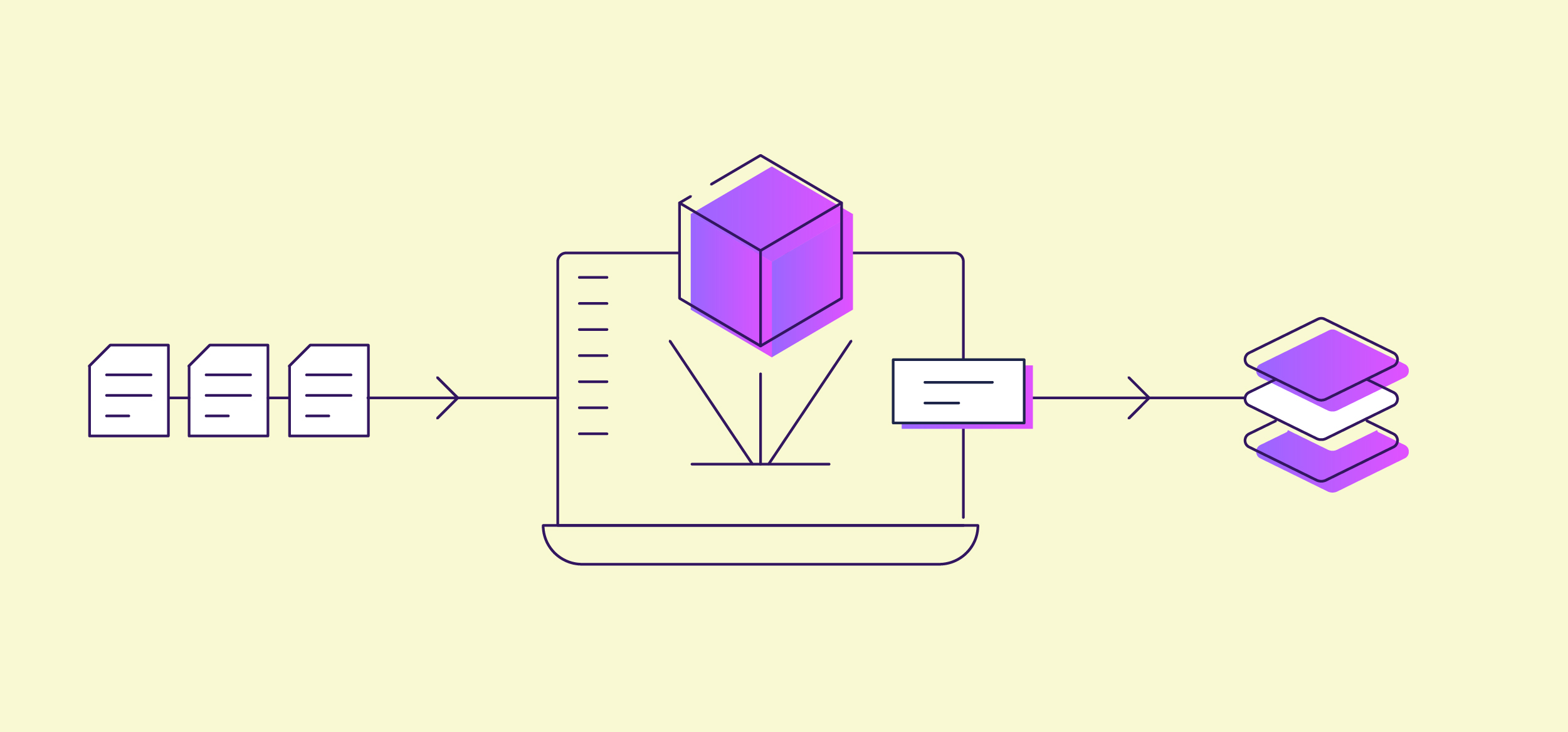
How to accelerate quote-to-bind cycles using AI
Where AI shortens the path from broker submission to bound policy.
Read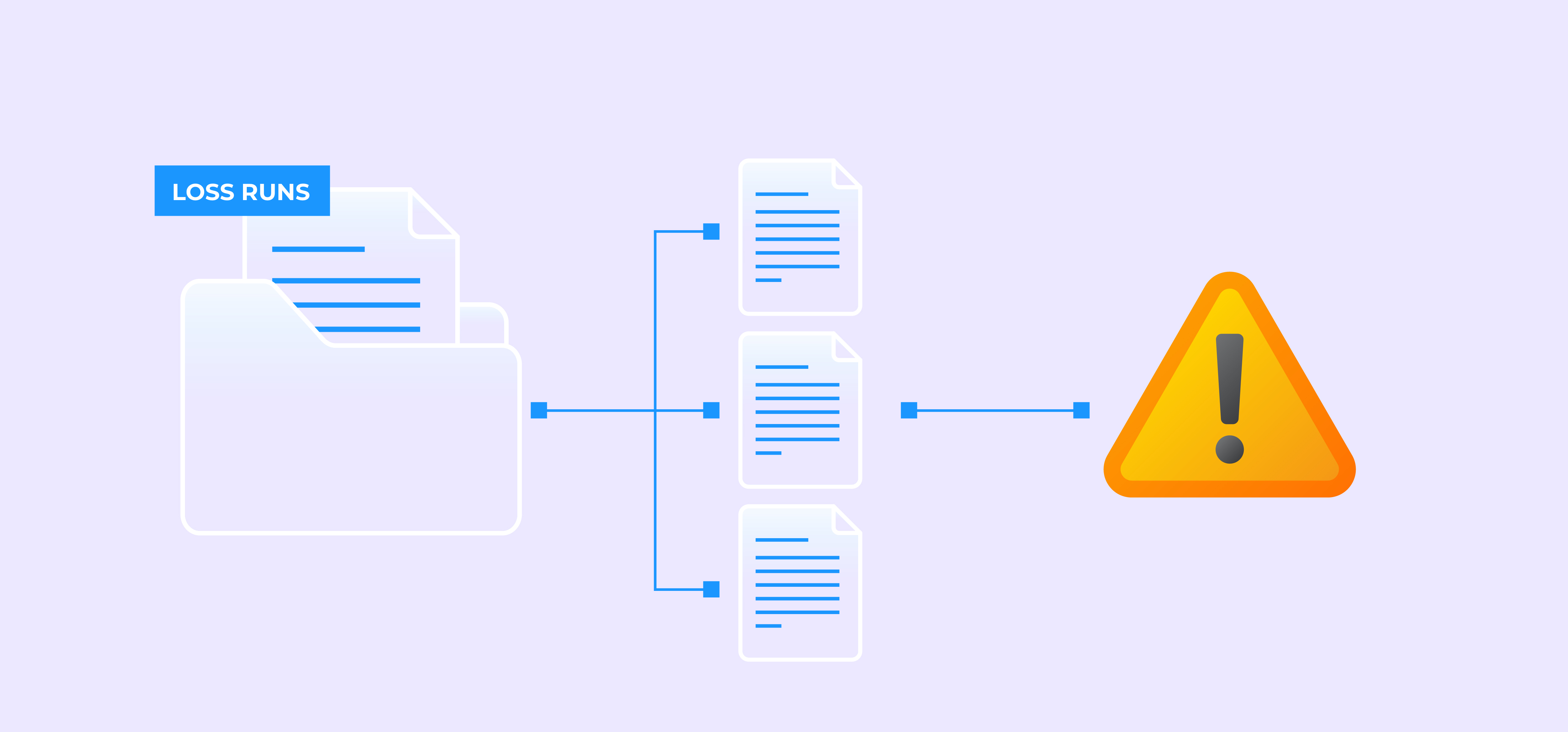
How AI automates loss runs
How AI reconciles multi-carrier loss history so underwriters go straight to pricing.
Read
AI for insurance submission intake: from chaos to automation
How AI organizes broker submissions and checks them against appetite before underwriting.
Read
How AI helps with insurance policy renewals
How AI gathers renewal data and surfaces exposure changes before the renewal date.
Read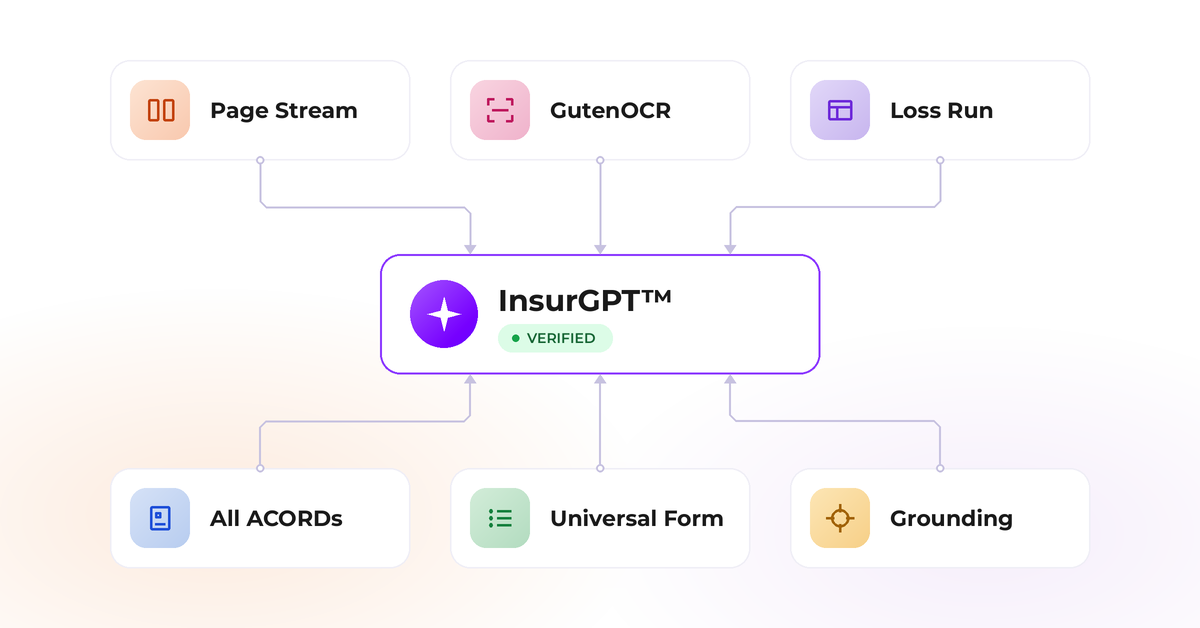
InsurGPT™: the AI models behind every AI agent
How our specialized insurance models work, and why they outperform general AI.
ReadWrite more of the right business with the team you have.
Our workflow experts map your process with you and put AI agents to work on it, so your underwriters spend their time on risk selection and pricing.