
Webinar
AI in Insurance Underwriting: Submission to Decision (2026)
Follow one commercial submission from intake to decision, and see what the AI agent handles and where the underwriter makes the call.

Video not playing? Switch video player.
About this session
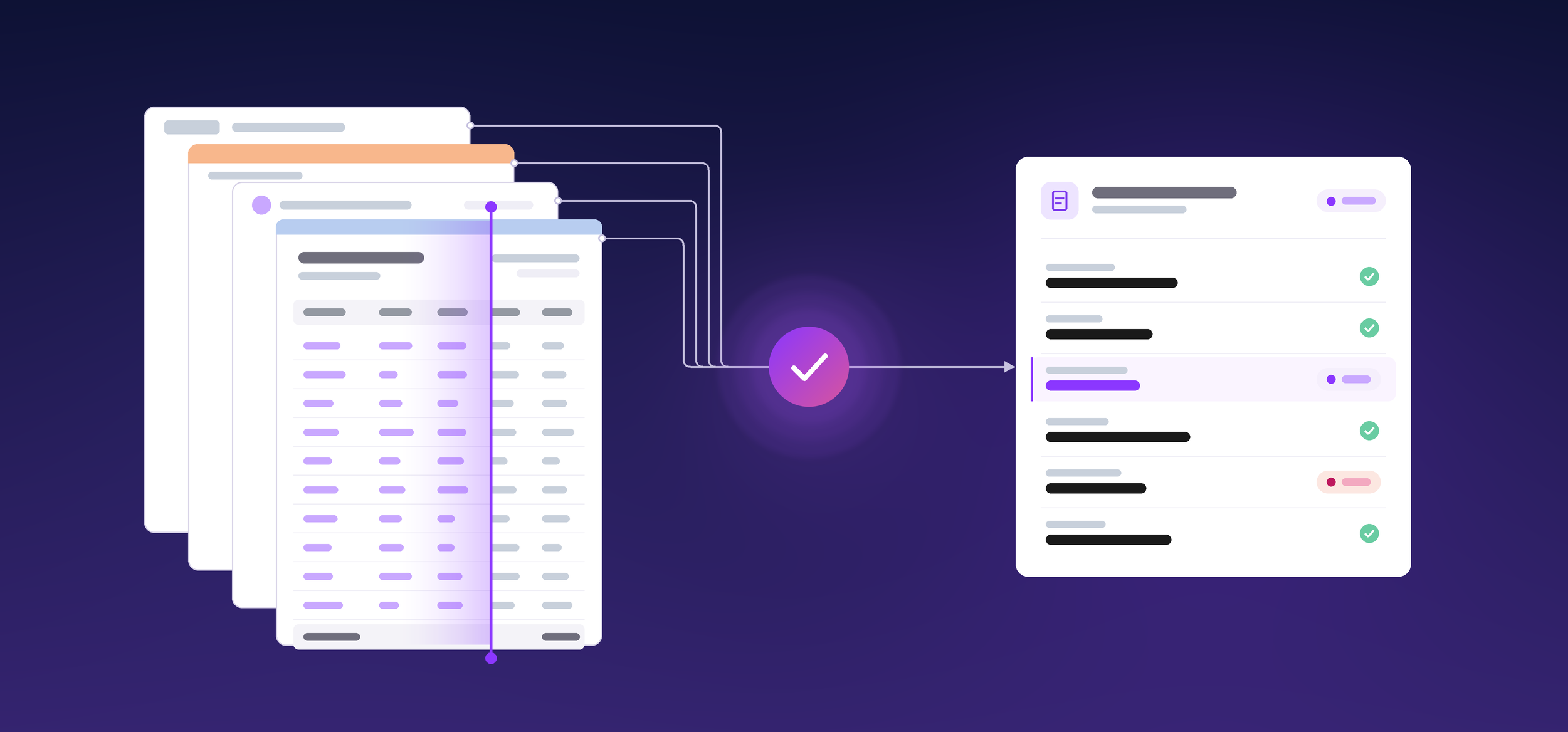
A commercial submission arrives in pieces: broker emails, loss runs, schedules of values, and supplemental documents spread across attachments. Chaz Perera, Co-Founder and CEO of Bevaya, follows one submission from the moment it lands to the underwriter's final decision and shows what the AI agent handles at each stage.
This session is for underwriting leaders, operations teams, and carrier, MGA, and program executives who want a clear picture of how AI in insurance underwriting divides the work. The agent reads the file, runs clearance and appetite checks, routes it to the right underwriter, reconciles the loss runs, and builds a rating-ready file. The underwriter makes the calls that need judgment, including price, terms, and bind. The Q&A covers accountability, systems integration, the broker experience, data security, and how long trust takes.
Why it matters. Prep work takes up much of an underwriter's day. When the file arrives complete, that time goes to the decisions only an underwriter can make.
What you'll learn
The agent reads every document
It splits broker emails into documents, extracts the data, and checks totals across the file.
Clearance and appetite run first
Duplicates, broker conflicts, and appetite are checked, with a reason on every result.
Loss runs become one history
Loss runs from different carriers are reconciled into one ordered history.
Price and bind stay with you
The agent builds the rating-ready file, and the underwriter owns price, terms, and the quote.
Full transcript
Why underwriters lose the day to prep
Chaz Perera, BevayaSo, we work with a lot of underwriting teams and most of them are feeling the same squeeze. Submission volumes keep climbing. The team isn't getting any bigger and the day fills up with work that happens before anyone actually gets to underwriting. The underwriting itself, the part you're all really, really good at, gets whatever time is kind of left over.
So today, let's follow one submission from the moment it lands to the final decision. At each step, we'll look at what an AI agent can take off your plate and where you, the underwriter, can make the call. So, one submission from start to finish.
Where the first half hour of a submission goes
Chaz Perera, BevayaOkay? So, think about the last submission you opened. How much of your first half hour went to just figuring out what the heck is this? What's in it?
Because a submission rarely shows up as one clean file. It comes in, you know, as a broker email with ACORD forms, loss runs, some type of exposure schedule, a whole handful of other types of attachments. Before anyone can judge a risk, all of that has to first be sorted. It has to be read through. has to be checked, you know, against appetite, essentially cleared.
And because it usually gets worked in the order it arrives, your best risks often sit in the queue behind everything else. So the longer a good submission waits, the more likely the broker has already placed it somewhere faster than you got to it. So most of the day goes to prep, not to decisions only an underwriter is tuned to making. That's the problem AI can help solve.
So let's take a look at how that actually happens.
The six steps of a submission
Chaz Perera, BevayaSo this is the full path of that submission in a single slide. A submission arrives you know the file comes together it reaches the right desk the loss history gets built the file becomes rating ready and then there's the decision and and we're going to sort of watch these two lanes as we go. The top lane being the AI agent, the bottom lane being you, the underwriter. The agent does the gathering and the groundwork and it checks in with a person wherever judgment is really needed.
You as the underwriter get to do the underwriting. So it's the same six steps on every file. So once you see where the handoffs are, you'll start to recognize them everywhere. And as we go, keep your own team in mind.
You know, which of these six steps takes up most of their day right now?
Reading every document at intake
Chaz Perera, BevayaSo, let's start with the sub let's start with where the submission let's start with where the submission does with everything, you know, where essentially where it lands at once. So the first job is simply reading everything and reading it the way you as the underwriter actually would. The agent watches every channel submission comes in through, you know, from the shared inbox to the mail room. When a broker sends one email with eight attachments, it splits that into separate documents and figures out what each one is. it knows, you know, not just it's an ACORD form, but specifically what type of ACORD form is it including like state variances that exist or some brokers happen to have customized layouts. and you know, we know they're out there.
At Bevaya, our accuracy on ACORDs is 99% across every variant and it reads the messy stuff, too. Imagine somebody hand wrote something, put notes in the margins. You know, sometimes things get faxed once or twice. Then our agents will pull what you pull yourself, right?
Location by location. It makes sure that the totals add up across every tab and that the application agrees with the schedule and the loss runs. It also runs outside lookups. So the codes and the business details are checked way before you see it.
So by the time you see it, the file is actually structured, went from unstructured to structured. And how long that how long does that usually take you when you're trying to do it on a messy file? Is it 20 minutes or is it more? I suspect it's more.
You know, because you got to open those attachments one at a time. You got to work through the different editions of the ACORD. You got to you got to get that stuff into your workbench. All of that is done for you before you show up, before you start.
What slows intake down today is the variant ACORDs. It's the handwriting. The handwritten endorsement, it's the schedule. It's the 40 tabs in an Excel spreadsheet.
The agent is built exactly for those things. So the handful of ugly files stops setting the pace of the whole queue.
Clearance, appetite checks, and broker follow-ups
Chaz Perera, BevayaNow reading is half the battle. The other half is checking things to make sure it's all correct. The agent runs clearance looking for duplicates against your prior submissions or your bound policies. Clearance also checks for broker conflicts so you so you find out before anyone starts quoting.
Carrier conflicts do, by the way. It screens the risks against your appetite guidelines. It attaches a reason to every hit and every miss. So nothing is a black box.
When something's missing, it sends the broker a targeted follow-up on its own. Say one prior carrier's loss runs never made it into the package, the broker gets a short note asking for that documentation, and the file doesn't sit until someone notices it. It also writes a one-page risk summary to hand you. So instead of a stack of attachments, you get a structured file and a short brief.
Where the underwriter steps in at intake
Chaz Perera, BevayaNow, two places the underwriter steps in. First any field the agent the agent isn't confident about goes to a person. Every value links straight back to the exact spot in the source document. So you're verifying, not hunting for the answers.
You decide how sure it has to be. Your team sets the confidence thresholds around that. Anything above it moves on automatically. Anything below it gets flagged for a person field by field.
So your attention goes straight to the thing you need to focus on on screen. that's easy to read. Green when the AI agent is confident, flagged when it isn't, and a link back to the page where those values came from. Second, flag duplicates and anything below your appetite floor go to a person who reads the AI agent's reasoning and makes the call. The agent makes sure the calls that you need, the calls that you need to actually reach you get to you with sound reasoning attached to it.
One insurer we work with, it's a top 20 P&C carrier took ACORD submission processing from 10 to 15 minutes down to under two. Up to 80% of those go straight through. mismatches get caught before a quote goes out and out of appetite risk gets stopped before it ever reaches the underwriter in the book.
Routing the submission to the right desk
Chaz Perera, BevayaNow once the file is clean, it has to get to the right person. So how does a submission find its way to your desk today? A shared inbox, a spreadsheet, one person who just knows that's the right place to send it. You know, some of that stuff just sort of lives in your head.
I suppose the AI agent scores every cleared submission against the priorities your team sets. Then it sends the file to someone with the right license and the right authority to write it and checks who's already buried that week. So a risk that's over someone's authority doesn't land on their desk and get bounced back. It goes to the right person who can write it. the urgent and deadline driven work moves to the top of the queue. every assignment comes with a written reason so routing stops being a mystery.
It also keeps the workloads balanced so one under one underwriter isn't drowning while another has room. So when routing is manual, two things tend to go wrong. A good risk loses a day sitting in the wrong inbox and your busiest underwriter becomes the bottleneck for other people. So speed here really pays off in your results.
Faster quotes mean higher bind rates. So a day saved in routing is a day the broker isn't shopping the account around. And where does the underwriter step in? If a submission doesn't fit any of your rules, a person on your team decides where it goes.
The agent never has to guess and it doesn't make up the rules on its own. The goal is getting each file to the right desk faster while your team keeps control over the process and and over how that process gets governed.
Building one loss history from many loss runs
Chaz Perera, BevayaAll right. So the next part is the bit that everyone loves mostly because it's the most complicated bit loss runs. So, if you've ever stitched together five years of loss history from four different carriers by hand, you know where this step eats a morning. The AI agent takes loss runs in whatever shape they arrive, scanned images included, by the way, and does the reconciliation work nobody enjoys.
When one carrier says case reserves, and another says indemnity case, it knows they mean the same thing. It puts the years and the valuation dates in order. So four carriers read like one history and it does the insurance math like working out total incurred when paid in reserves are sitting in separate columns with no incurred anywhere on the document. At Bevaya, our loss run accuracy stays above 91% across every format we've seen in production.
When a new carrier format shows up, nobody has to reconfigure anything. If those formats don't line up, the history is either wrong or it means another round of rework. with the open with the spreadsheet open. You know that humans hate that and it's time that you'd rather be spending evaluating the full risk. Our AI is trained to deal with all of those idiosyncrasies that exist in this process.
By the way, what it does not do is tell you what any of that actually means. It surfaces it surfaces the things that should catch your eye. the large open claims, the unusual development, the claims sitting near policy limits, the gaps or overlaps in coverage. Those are all the details that will move price and reading what they mean for this risk. That's an underwriting task that stays with you.
The AI agent's job is to make sure you're looking at a complete correct picture instead of a pile of PDFs in four different formats.
Assembling the rating-ready file
Chaz Perera, BevayaSo now we reach the step everything has been building towards the file is ready and it's your call. Everything up to this point has led to here. The file is complete when you open it. The AI agent pulls everything from the earlier steps into one package, plus any outside data your guidelines ask for.
Before anything goes to the rating engine, it checks that every input is there and that those inputs are correct. That way, the engine doesn't kick the file back to you. Anything that differs from the expiring terms or sits outside your guidelines gets called out up front. Then it loads the it loads the rating engine and writes first drafts of the referral note and the quote package for you to review.
Nothing in that package is a number without a source behind it. By the way, think about the last referral you sent up. How much of that time went to the judgment call and how much of it went to assembling the case for it? Writing one from scratch means starting at a blank page, rewording the same summary you've written hundreds of times.
Having a solid draft in front of you changes that. It's built from the same data you're about to judge. So you're editing and sharpening instead of starting cold. Every file is built the same way every single time.
The one you open looks like the one your colleague opened. So comparable risks get comparable workups. That's consistency. and by the way, that consistency is really important. And I I would argue it's one of the biggest wins.
What reaches the underwriter's desk
Chaz Perera, BevayaSo what's on your desk now? Only the things that you need. The claims that caught the agent, the AI agent's eye. What's different from the expiring terms? anything it couldn't confirm and a draft you can push back on if the risk is clean and inside appetite that quick review that's a quick review.
If it isn't you've got the reasoning and the flags in one place that's what you need to decide on how to price what to put on it and frankly whether to walk away. So from there it's all underwriting. What do these details tell you about the risk? Do you refer it?
Do you bind do you quote it? That's yours.
Where the line sits: rates, premium, and bind
Chaz Perera, BevayaHere's where the line sits. The AI agent gets the file ready and shows its work. It does not set rates. It does not calculate premium and it does not bind coverage. that rating engine does the math.
You own the price, the terms, and ultimately the quote. Every value traces back to its source, so you can always check the work. By the way, the traceability matters more than it sounds. The first question a good underwriter asks a new tool is, "Why should I trust what you're showing me?"
The honest answer can't be because the system said so. It has to be, "Here's the document it came from. Take a look." That's the difference between a tool your team leans on and one they kind of find ways to work around because by the way a fast quote on a bad risk is still a bad quote.
So speed only helps you when the judgment is still really really strong and really really sound and that's why we always believe it should sit with you as the experts. A carrier we work with, by the way, doubled their submission intake volumes without adding a single person and are achieving over 90% data accuracy on the full submission. And they were able to cut down their sub that submission processing time by 87% as a result of leveraging our AI agents. So real real improvements in a really really short amount of time.
How the underwriter's day changes
Chaz Perera, BevayaSo what's changed about your day? Without the AI agent, the shape of the day is familiar. You build the file by hand. You look up the you look up third-party data one source at a time.
You find the gaps only after the rating engine has rejected the file. And sends you back sends you sends you back to the broker to get more familiar with things. and you and then maybe you're writing a referral from a blank page. The decisions are in there somewhere buried under a few hours of prep with the AI with the AI agent. However, you open a complete file.
The gaps are already flagged. The paperwork is already drafted and the decisions are the are the first thing on your desk instead of the last because there that's that's really all there's left for you to do. Picture opening the file the first file of the morning and starting with the decision as opposed to starting with the grunt work to get to the decision. And by the way, if you're wondering whether that prep is really worth reclaiming, here's the number.
Underwriters can lose up to 40% of their time to manual intake, reading broker PDFs, pulling loss runs, rekeying ACORDs, and none of it needs judgment. All of it just takes away time from the work that really is important which is risk selection and pricing and critically dealing with the broker relationship that you have right that's that's what's probably going to win you the account in the first place. So underwriting gets better support with the prep handled and the judgment left where it belongs when you're using AI agents. You don't have to give up control to get your day back.
You just have to stop spending it on the wrong part of the process. Ultimately, you making a decision is the most critical part of what you do for your insurance carrier every single day. Okay, with that, thanks everyone for spending time with us. I'm going to hand it back to Jill for Q&A. And I see a bunch of questions have come through.
Jill Zakarian, BevayaAwesome. Thank you, Chaz. That was great. We hope everyone's leaving with a fresh perspective on how AI can support and help you and your team across the entire submission journey.
And before we hop into our Q&A, I'd like to invite you all to explore the many other sessions we do have available on demand. And you'll find a link to the Bevaya webinar library in your copy of today's presentation slides. All right. So, we are going to dive into our Q&A and we're going to just take the questions in order as they came and are coming in.
Q&A: Who's accountable when the AI gets it wrong
Jill Zakarian, BevayaOkay. So, the first question I see is what happens when the AI agent gets it wrong? Who's accountable for a bad a bad field value that slips through?
Chaz Perera, BevayaIt's a that's a great question. Probably the right question to ask when you think about AI not just in the context of underwriting but just generally speaking. Look, every value the AI agent produces has to link back to a source and you should be able to see that source and specifically where within that source that information came from. Whether it's a direct translation from this from the source or it's inferenced by reading things across multiple sources, you need to be able to see that very very clearly.
And you know in the context of our solution we have this concept called Highlight Mode that does exactly that right and behind it is not just here's where I got it from or here are the three places that had to come together for me to get to this for the AI to give you its perspective but it also gives you its confidence around that like I'm you know 97% sure this is the answer and for these reasons right that calibrated understanding is really really important to be able to get to the right answer. By the way, it's showing you this. You have the opportunity to override it.
So, if it's wrong, tell it it's wrong and it'll learn from it and get better. All right.
Q&A: Will AI agents mean fewer underwriters
Jill Zakarian, BevayaAwesome. Okay. So, Chaz, next question. Does this mean we need fewer underwriters over time?
Chaz Perera, BevayaI don't I don't think any of the customers we talked to are thinking about shrinking headcount. They're trying to grow their businesses. They're trying to respond to more of the submission volume that they're seeing. So you know the beauty of leveraging these AI agents is first and foremost you know respond to more submissions in the same amount of time with the same capacity so to speak.
And then two speed up the time it takes you to get to a quote. And both obviously you know have high correlation with each other which is if you can speed up the time it takes you to quote you should be able to review more submissions. And that's ultimately why this is a good thing for underwriters. I'll I'll add and you know we talked about it at the at the end of the at the end of the slides you know underwriting is about risk selection pricing but it's also about the relationship you have with that broker or that agent and being able to cultivate that relationship having the time to do that effectively is really important.
And so even if you don't get an opportunity to you know review more submissions in the same window of time, the fact that you're getting time to spend on each submission and shape each one sorry shape each quote and spend time on each quote and shape each quote with the agent or broker, there's a higher likelihood you're going to win that business.
Q&A: Fitting with policy admin systems and workbenches
Jill Zakarian, BevayaOkay, awesome. Next question. How does this fit with the systems we already have like our policy admin system or workbench?
Chaz Perera, BevayaYeah, look our solution has lots of connectors into well-established policy admin systems, workbenches, raters, etc. You know, think the way to think of these AI agents though is that they're sitting on top of all of these different systems because you know, your underwriting exercise isn't transacted in a single system, right? you're it starts with an email typically then it's you know having to pull your guidelines from one system or you know SharePoint for example maybe you have it in a PDF it's having to navigate across a few different systems to check you know where should things get routed to and so on so forth so you know the way we like to think about it is you know document in this case a submission to a decision But it's agnostic of the systems because it's sitting on top of everything and being able to transact all the work just like your human underwriting technicians or underwriting assistants are helping you do today.
Q&A: How the broker experience changes
Jill Zakarian, BevayaOkay, Chaz, the next question I see is, "How does the broker experience change? Will they feel like they're dealing with a bot instead of a person now?"
Chaz Perera, BevayaIn our experience, no, because we're not changing the way we communicate with them, right? If they sent something via email and you need, you know, the agent, AI agent needs to go back and ask for, I don't know, an additional two years of loss history. It's doing that via email, using the same email that came in from the broker to begin with. And you know conversing in natural language and you know still continuing to feel very human-like.
So I don't think they're going to notice a change there. If anything I'd argue that what they're probably going to notice is the response times and the communication is probably increasing and happening a lot faster and you know maybe that's a good thing.
Q&A: Data security and compliance
Jill Zakarian, BevayaAwesome. Okay. So, next question I see is we handle sensitive loss and exposure data. What are we exposing by running it through an AI agent?
Chaz Perera, BevayaSo I think yes, the answer is a lot of sensitive data are coming into these platforms and our platform being one. You know, I suppose what you really want to ask yourself is, you know, has the platform been independently audited? You know, or is the vendor sort of certifying it on their own? Is the data encrypted both in transit and at rest?
You know, do they is the data being kept separate customer by customer so that you know there's low risk of cross-contamination so to speak. And then the work product of these agents as they're going as these AI agents are going through each step one by one how's that being logged how traceable is it like you know is it is it truly immutable is it idempotent given that they're doing this work you know dozens to hundreds to thousands of times a day are you seeing consistency and predictability in the way they're they're working I think those things are really really important to sort of surface. And then you know like I just talking about Bevaya here for a second.
You know we're SOC 2 Type 2. We have outside auditors check us every single year. You know our data is encrypted in transit in transit and at rest. And then you know from a compliance perspective we're we're you know compliant to HIPAA to NYCRR 500 to GDPR to CCPA.
So, like there's a lot of things that have to be there for you to have high confidence that, you know, the vendors that are processing this stuff for you will do it well.
Q&A: How long before underwriters trust the output
Jill Zakarian, BevayaAwesome. I know we're getting really, really close to time, but we got a lot of questions, Chaz. So, I just want to go over just one, you know, one last question.
Chaz Perera, BevayaSure.
Jill Zakarian, BevayaSo how long before underwriters trust the output instead of double-checking everything by hand?
Chaz Perera, BevayaLet's just say longer than go live but shorter than you probably expect. Look, building trust with AI is being able is really around being able to show that how it's responding to things is in line with or better than how the humans have been doing it. And the way to do that is sure you know testing UAT is important here but I think it's also like having those confidence scores being able to see where the data or the decision or the reasoning came from and how it got shaped and having the AI make you know provide that reasoning and the underwriter being able to rationalize all of that, right?
Like that's the stuff that builds trust. And that can happen very quickly. We're not talking 10 months, 12 months, 18 months. We're talking two to three months. You just need to see it.
Frequently asked questions
What does an AI agent do with an insurance submission?
An AI agent handles the prep work before the underwriter opens the file. In this session, Chaz Perera explains that Bevaya's AI agent reads every document in the submission, runs clearance and appetite checks with a reason attached to each result, asks the broker for missing documents, routes the file to an underwriter with the right authority, and reconciles loss runs into one history.
Which underwriting decisions stay with the underwriter?
The underwriter owns the price, the terms, and the quote, along with whether to refer or bind. Bevaya's AI agent does not set rates, calculate premium, or bind coverage. People also review any field the agent isn't confident about, flagged duplicates, risks below the appetite floor, and submissions that don't fit the routing rules.
What is a rating-ready submission file?
A rating-ready file is a complete, checked submission the rating engine can accept without kicking it back. The AI agent pulls the earlier steps into one package with any outside data your guidelines require, checks that every input is present and correct, calls out differences from expiring terms, loads the rating engine, and drafts the referral note and quote package with a source behind every number.
How long before underwriters trust an AI agent's output?
Chaz Perera puts it at two to three months, longer than go-live but shorter than most teams expect. Trust comes from confidence scores and traceability, so underwriters can see where each value or decision came from and check it against the source.
Related resources
Get new sessions first
New webinars, customer stories, and product videos from Bevaya.
- New webinars and interviews as soon as they go live
- Customer stories from insurers putting AI Agents into production
- Product walkthroughs of new Bevaya capabilities