




Webinar
How AI Is Used in Insurance Claims Processing
Follow one auto insurance claim from first notice of loss to payment and see exactly what AI agents prepare at each step, and where the adjuster takes over.
Video not playing? Switch video player.
About this session
Claims files almost never arrive clean. Police reports, medical bills, repair estimates, demand letters, and correspondence trickle in over weeks and months, out of order and unlabeled. Before an adjuster can make a single coverage decision, someone has to sort, index, and match every document to the right claim, then rebuild the file each time something new arrives. That document work eats the first hours of every day and competes with the judgment calls only a licensed adjuster can make.
In this webinar, Bevaya Co-Founder and CEO Chaz Perera walks through how AI agents take on the prep work across a single auto claim, from FNOL and claims indexing through coverage review, medical bill and legal demand processing, claim file summarization, and invoice payment. At each step, the AI agent surfaces findings and the adjuster makes the call. The Q&A covers where to start, how AI handles messy documents, what compliance teams ask, and how fast to expect ROI.
What you'll learn
How claims indexing and FNOL setup work together
An AI agent classifies every incoming document the moment it arrives, checks for duplicates, opens the claim, and routes it to the right adjuster, cutting FNOL handling time from 15 minutes to four.
What a claim-to-policy comparison agent prepares
The agent reads declarations, endorsements, and schedules together, maps the loss against limits and exclusions, and drafts a cited coverage position and initial reserve for the adjuster to review.
How the claim file stays current as it grows
Medical bill, legal demand, and claim file summarization agents capture new documents as they arrive, flag deadlines and contradictions, and keep a linked briefing up to date so the adjuster is current every time they open the file.
Where adjusters spend their time instead
Coverage decisions, reserve commitments, settlement offers, and payment approvals stay with the adjuster. The goal is to clear the routine document work so experienced adjusters get their hours back for the files that need their judgment.
Full transcript
Why claim files slow adjusters down
Chaz Perera, Bevaya
We work with a lot of claims teams and they're all over the map on AI. Some are just starting to look at it. Some already have an agent or two running. The daily reality is the same for all of them. A claim almost never shows up as one clean file. It starts with a first notice and it keeps growing for weeks, months, and sometimes years.
Medical bills, repair estimates, demand letters, correspondence. Every piece has to be sorted, indexed, and matched to the right claim before anyone can start to act on it. That work lands on your adjusters who spend a big part of their day assembling files instead of making the calls only they can make. If you've watched a good adjuster spend the morning sorting mail, you know the problem.
For the wider picture on where the industry sits, our "State of AI Adoption in Insurance" report is in the related content widget. Today, we'll follow one claim from first notice of loss to payment. At each step, you'll see what an AI agent prepares and where the adjuster takes over.
Following one auto claim
Chaz Perera, Bevaya
Picture a single auto claim. The first notice comes in on Monday. A police report shows up Wednesday. The first medical bill the following week. An estimate probably a few days after that. Then a demand letter, more bills, more correspondence that trickles in for months on end.
None of it arrives in order and none of it arrives labeled. Somebody has to open each document, work out what it is, and attach it to the right claim. Attach it to the wrong claim, and it's worse than useless because now two files are wrong. Before an adjuster can make a single decision, the file has to be built and it gets rebuilt every time something new comes in.
That's hours a week per adjuster going to sorting, matching, and data entry. On a desk carrying a few hundred open claims, that's going to add up really fast. The job is the coverage call. It's the reserve decision. It's the settlement offer. The file work sits in front of that judgment every day and it eats the first hours.
It costs more than time, by the way. When the file is a pile of unsorted documents, a bill gets entered twice. A demand with a deadline sits in a queue. A duplicate claim gets opened. Each one starts as a document nobody had time to handle. Claim volumes keep going up and adjuster capacity isn't. Where are your people's hours really going?
The path from first notice to payment
Chaz Perera, Bevaya
This is the whole path on one slide. It's rudimentary, but it does follow. The file opens, then there's the coverage call. The file keeps growing. At some point, you're making a payment, possibly multiple payments, and the decision at the end.
The two rows matter more than the steps. The top row is what an AI agent prepares. The bottom row is what stays with the claims adjuster. They move together across the claim. The agent does the prep and the adjuster makes the call. That holds at every step you're about to see. The agent never decides coverage, and the adjuster never rekeys a first notice.
Claims indexing and FNOL setup
Chaz Perera, Bevaya
The clock starts here and this step has the most manual work hiding within it. Two agents handle it. FNOL and FROI setup opens the claim, and claims indexing sorts everything that comes in.
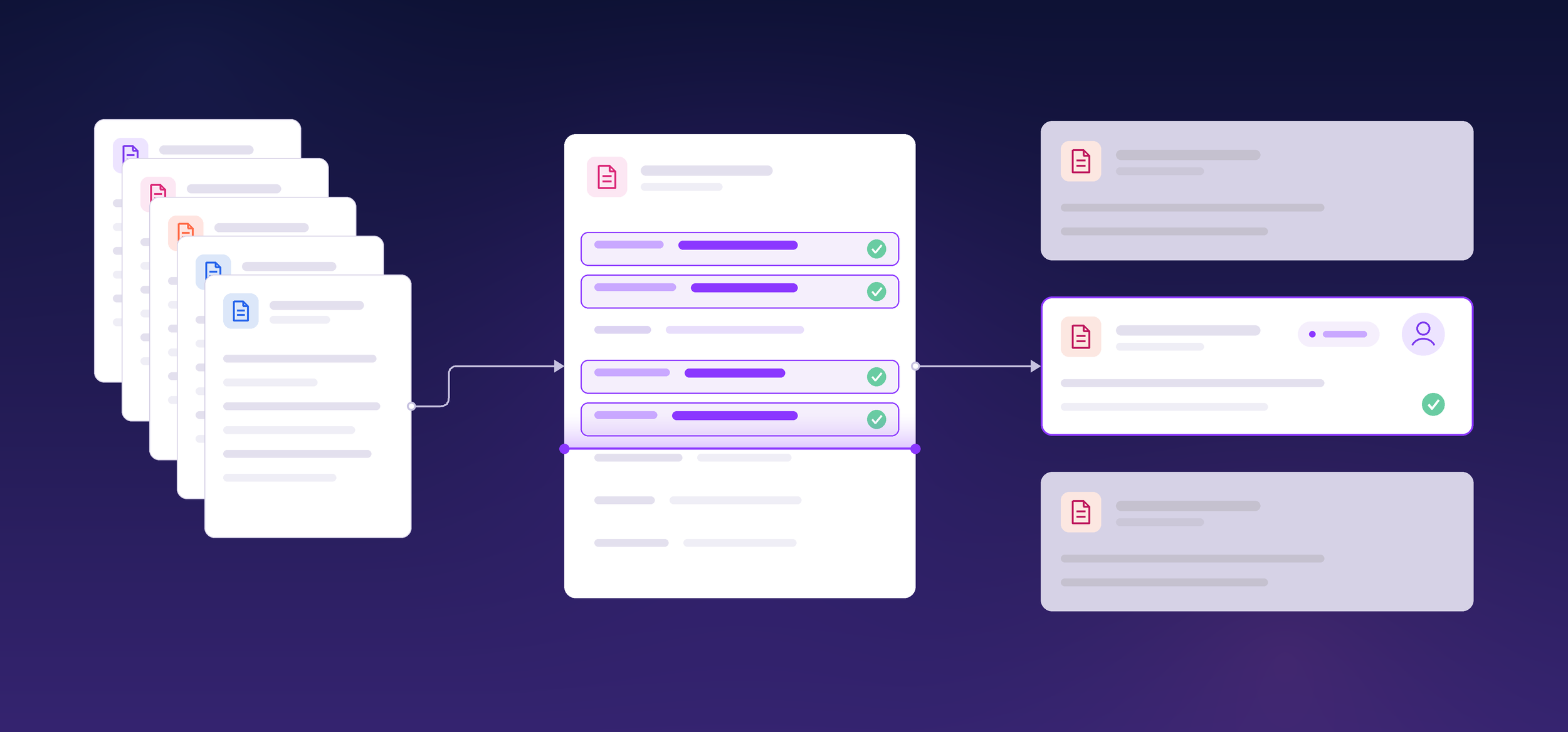
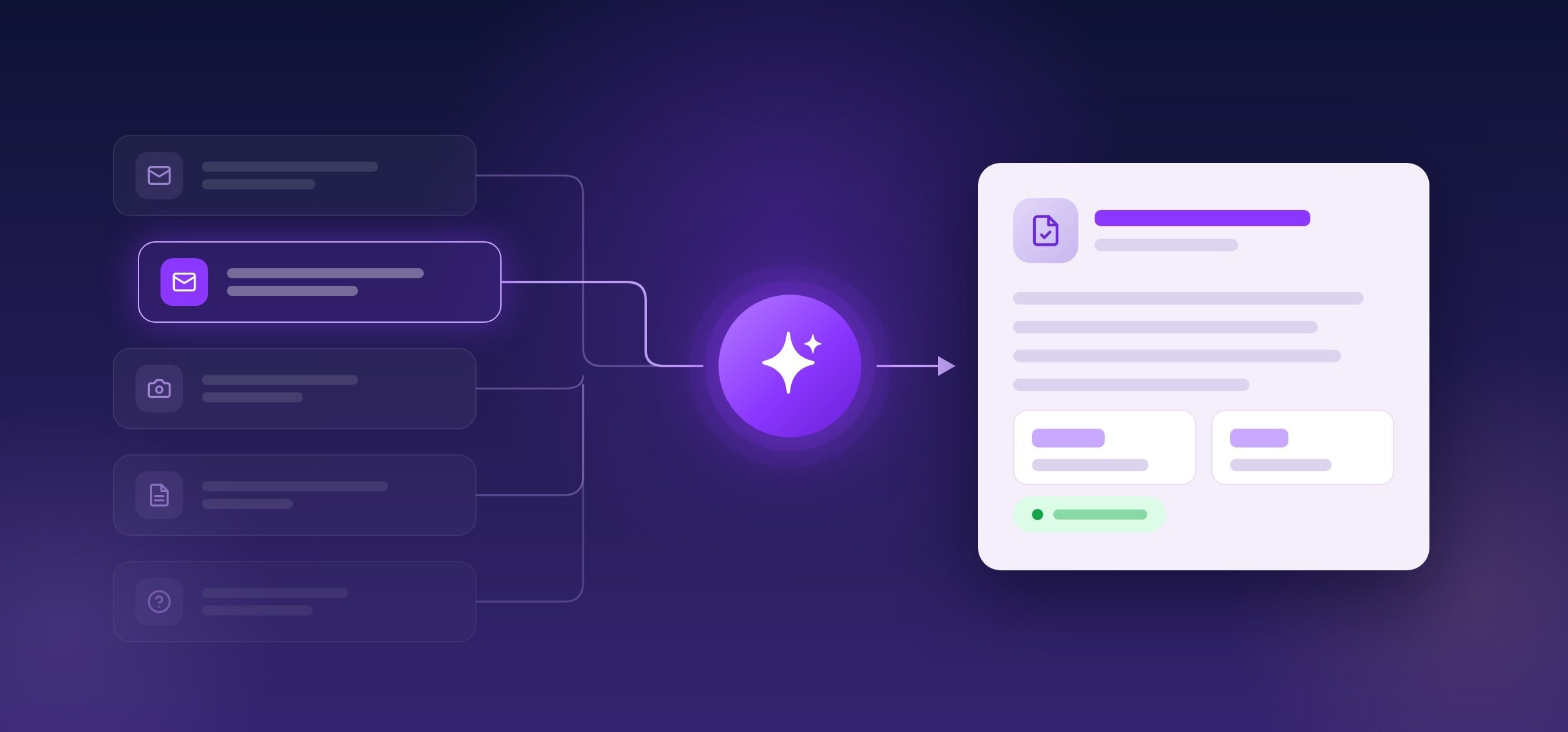
Let's start with how the documents get in the door. Claims indexing watches every channel. A document could arrive through emails, the mailroom, from brokers, from claims portals, from SFTP feeds. The moment something lands, it reads it. It classifies the document type and it indexes it to the right claim. Nobody presorts and no stack waits for someone to triage it in the morning.
Then the FNOL agent sets up the claim. It pulls the claim facts off the first notice, confirms the policy was in force on the date of the loss, and runs a duplicate check so you don't open a second file accidentally. Then it opens the claim and routes it to the right adjuster who should own it. This matters because a misrouted claim could sit for days before someone notices.
It also drafts the internal briefing and the acknowledgement letter that has to go out on a clock. When a legal demand arrives with a response deadline, the agent flags it right away.
The adjuster steps in at three places. First, any field the agent wasn't fully confident about, with a value linked straight to the source documents, so you check it in seconds instead of hunting through a 40-page PDF. Second, anything flagged as a possible duplicate with the reason for that flag. A person's going to make the call. Third, the briefing and the acknowledgement which the adjuster reviews before anything goes out.
One national P&C carrier put the FNOL agent on more than 200,000 loss reports a year. Handling time dropped from 15 minutes to four, which handed 33 hours a year back to their claims adjusting team. The claim is open and on the right desk, and nobody spent the morning sorting mail to get there.
Coverage: claim-to-policy comparison
Chaz Perera, Bevaya
Next is the call that shapes everything after it. Is the loss covered and on what terms? The claim-to-policy comparison agent can prepare that for you.
This agent pulls the policy that was in force on the date of the loss and reads the declarations, the base form, the endorsements, and the schedules together. This matters because the answer often sits in how these pieces interact with each other. An endorsement can change what the base form seems to say.
From there, the agent maps the loss against the limits, the conditions, and the exclusions, and cites the policy language behind its findings. It can even draft a coverage position and a reservation of rights letter for the adjuster to weigh, and it can propose an initial reserve with its reasoning attached.
These are all drafts, by the way, and the adjuster should treat it like that. Coverage positions, reservation of rights, and reserves all stay ultimately with the adjuster and the adjuster's management team. The citations the agent provides make the review faster because you can see which clause drove each finding and decide whether you agree or not. A cited position is also easier to defend later, whether the question comes from a regulator, a reinsurer, or a bad faith claim.
Consistency is the other gain here. Two adjusters looking at the same claim and the same policy should reach the same answer, and a shared cited read makes that far more likely.
Medical bills, legal demands, and file summaries
Chaz Perera, Bevaya
Now, the file doesn't sit still. It grows for weeks and sometimes the biggest documents show up last. Three agents work really well here: for medical bills, legal demands, and claim file summarization, there are three separate agents that know how to run those processes.
Two agents read what arrives. The medical bill agent identifies every bill as it lands and captures the codes, the charges, the providers, and the dates of service. It validates them. It flags duplicate bills, duplicate services, and charges, and gets them ready for review. The legal demand agent reads each demand letter, pulls out the facts that matter, and captures the response deadlines. Large demands get surfaced right away, so a reserve change doesn't wait on someone working through the inbox.
The third AI agent keeps the file current, and it's the one I'd point to because it changes where your time actually goes. Most of you have opened a claim file three months in and reread the whole thing just to get your bearings. Claim file summarization keeps a specific briefing up to date as documents or specifics on the claim change. When you open the claim, you're automatically current. Every point in that briefing links back to the documentation or the decisions that came before it.
For example, you can click into the bill, the demand, or the report and see exactly where the facts came from, who made those decisions. What makes it a briefing you can trust without having to double-check all the work? It also lines up facts across the file. The same detail in the police report, the medical narrative, and the demand gets compared to each other, and contradictions will get flagged before they turn into a dispute. That's an easy catch to miss by hand when the documents arrived weeks apart.
Responding to each demand is the adjuster's call and so is adjusting reserves as new bills and demands and other activity occurs on the claim. The agent keeps the claim file assembled and current, so each of these calls that the adjuster has to make are clear and well sourced.
A national TPA reached a 90% straight-through processing rate on medical bill review across more than 17,000 bills a year. Their specialists spend their time on medical judgment instead of keying in and reviewing charges.
Invoice processing and claims leakage
Chaz Perera, Bevaya
All right, the last step is probably the shortest or easiest to describe and it's where a lot of claims leakage quietly happens. It's in payment processing. And here again, the adjuster will still make the final call.
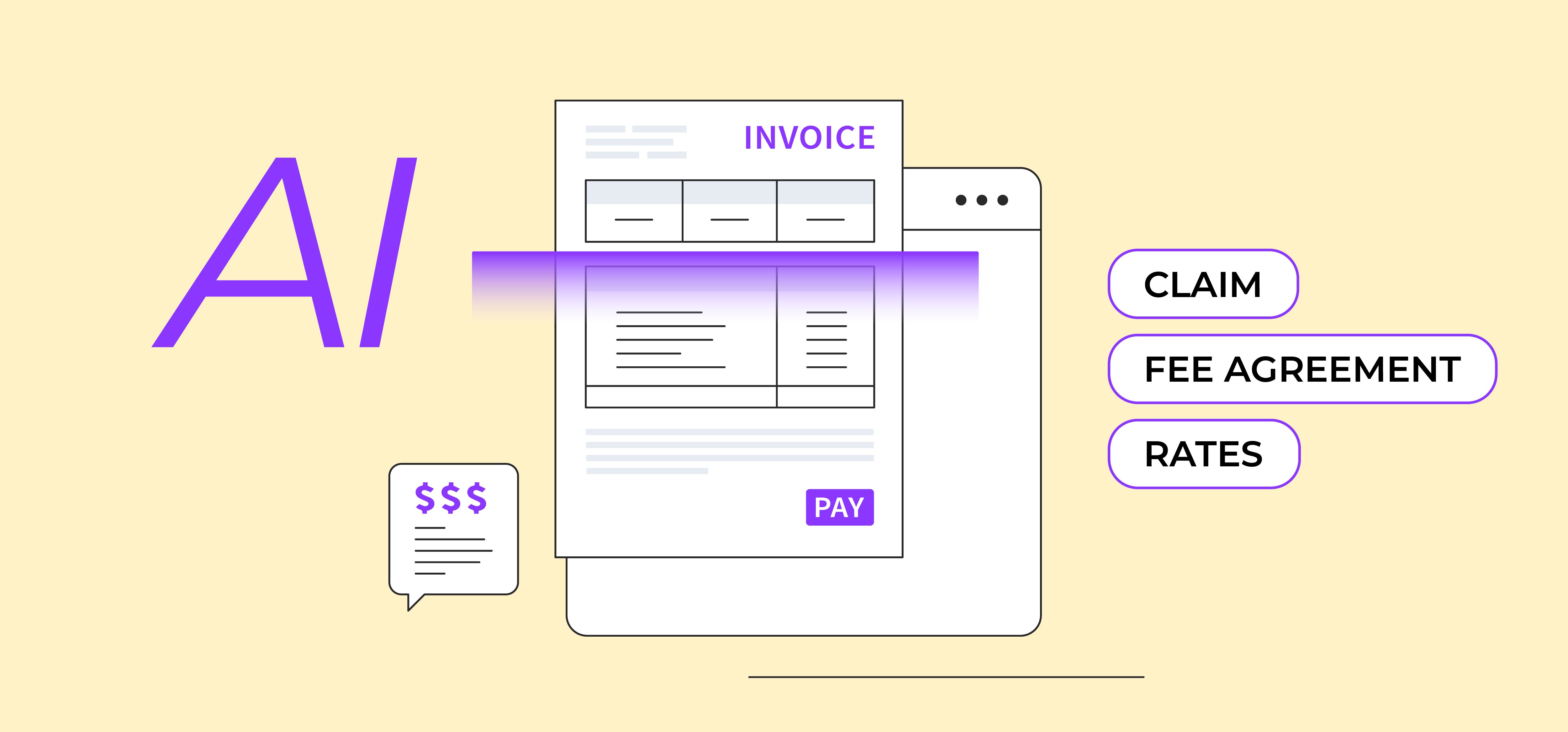
The AI agent responsible for processing invoices can check each invoice against the file. Is it the right amount for the right service on the right claim and does it match what was authorized? The clean ones go straight through to payment. The ones that don't line up are held with the reason attached and sent to the right approver with a recommendation. For example, you should approve it, you should return it, you should escalate it potentially, you should split these charges.
Anything sent back goes to the vendor with a clear reason code, so the fix starts on their side, not yours. Settlement belongs to the adjuster and so does every payment approval. What changes is that the checking in front of the approval is already done on every invoice, on every action, including, by the way, the weeks when nobody had time to look closely.
Think about how money walks out the door on claims. A duplicate invoice paid twice, a charge nobody authorized, a bill sitting on the wrong claim file. Each one is small and routine. And over a year, they could add up. Catching one invoice at a time by hand is the work people stop doing when the queue gets long.
One regional carrier ran across this, more than 8,500 invoices a year, and we were able to help them get to a 97% straight-through processing rate on these invoices by cleaning their process. It ended up releasing about 85% capacity back to their people. The claims got paid correctly and nobody spent weeks reconciling the work.
What stays with the adjuster
Chaz Perera, Bevaya
We hear this question a lot. If the agents do all of that, what's left for the adjuster? The part of the job that needed a licensed adjuster in the first place is where this exists.
The agent surfaces the coverage findings, the demand deadlines, and the invoice checks, and they can propose an initial reserve, but they don't adjudicate. They don't commit reserves or make settlements. That's for the adjusters to decide. The adjuster must decide coverage. They must commit the reserves and they must sign off on settlement and payment.
Repetitive high-volume document work should go away. It should go to the AI agents. Work that carries true accountability with your customers, with your claimants, that's where your people need to sit.
The goal is clear. Get the rote and uninteresting work off the desk of the adjuster to leave more room for judgment. Think about where that time goes. The complex claim, the litigated file, the one with a tricky coverage question. Those claims reward an experienced adjuster sitting with them, and right now they compete with a pile of routine handling. Let's clear the routine work and your best people get their hours back for the files that actually need their experience and judgment.
One global insurer handles more than 70% of its claims straight through across more than 10,000 claims a month with a 90% drop in manual intervention. That's real time that's gone back to their claims adjusters.
What changes day to day
Chaz Perera, Bevaya
What changes day to day? On the left is the file today. Documents arrive out of order and someone sorts and indexes them by hand. The adjuster waits for the file to be assembled, rereads it every time it grows, and fits the decisions in around all the other handling work that they have to do.
On the right is the same claim once the AI agents carry the prep work. Documents get classified and matched the moment they arrive. The claim opens on the right desk with a briefing already drafted and the file stays current as it grows. Every fact linked to the appropriate source. The adjuster opens it and goes straight to the decision.
Claims indexing, by the way, shows the size of this shift. One enterprise P&C carrier made claims indexing 95% faster, from 24 hours to under five minutes. Every claim that opens clean is a claim nobody had to rebuild by hand, and across a full book of business, that's capacity that's truly added back to your organization.
That's one claim, first notice to payment. If you take one thing with you, take this: the goal is giving your adjusters their day back for the work only they can do.
Jill Zakarian, Bevaya
Thanks, Chaz. We hope everyone's leaving with one big idea: the AI preps, the adjuster decides, and the hours move from file work to the decisions that matter most. Before we hop into our Q&A, I'd like to invite you all to explore the many other past sessions we have available to watch anytime. You'll find a link to our video library in today's presentation slides.
Q&A: Where to start with AI in claims
Jill Zakarian, Bevaya
All right, looks like we have some questions that came in and are still coming in. First question in our queue is: where would you really start? We're not going to deploy nine agents on day one. What's the first move that moves the needle without biting off too much?
Chaz Perera, Bevaya
It's a good question. I think the safest place to start, and certainly one that I would advise folks with limited AI experience in claims, start with claims indexing. The reason I say this is partly operational and partly political.
Operationally speaking, indexing is where the highest volume and the lowest judgment work sits within your organization today, so it's the fastest place to free up hours on an adjuster's desk. Politically speaking, it's work nobody enjoys doing, so it lands well with the team rather than them feeling like something is being taken away from them.
From there, my suggestion would be to look at FNOL claims setup. It's the natural next step because it runs on the documents that have been successfully indexed, so your second deployment is effectively an extension of the first. It's not necessarily a new project.
Teams that typically follow that path see the adjuster-facing changes within the first full quarter after go-live, meaning they see the capacity get released and reinvested in the files and the work product of the claims adjusters that genuinely require their judgment. Start small, prove it, and then expand quickly.
Q&A: Do you need a new claim system?
Jill Zakarian, Bevaya
All right, awesome. Next question. Do we have to replace our claim system to use AI like this?
Chaz Perera, Bevaya
No, no, no, no. I think that's one of the first things to check with any AI tool for claims. A good one works alongside your claims systems so that your adjusters can continue to work the way they work.
By the way, in my experience, as much as we'd all like to believe that we sit singularly in one system to transact a claim end to end, that's really not the case. For example, you might be using Guidewire ClaimCenter as your core claim system, but it wouldn't surprise me if you were looking at other software like Legal Exchange or CT360 for vendor billing and legal bills, and possibly a third platform for medical bills.
Your adjusters have to go across a multitude of systems. That also means your AI has to go across a multitude of systems. Finding AI that can sit on top of everything is actually more advantageous than solely or singularly hoping that the AI embedded in these individual systems will solve your problems, because it's much more difficult to connect them all together.
Q&A: Handling messy documents
Jill Zakarian, Bevaya
Awesome. All right, next question. We've tried tools that work on clean forms and break on anything messy. Why would this be different?
Chaz Perera, Bevaya
When I think about Bevaya, it's why we built the company. It wasn't to solve the simple and the rote, meaning standard claims forms, because insurance doesn't really run that way. It relies extensively on correspondence, and that correspondence coming in snail mail, email, or even fax, is messy.
What we offer is insurance-specific models trained on hundreds of millions of non-public real insurance documents that understand and approach insurance problems in the same way that your experienced claims assistants and claims adjusters would when they see these things.
Critically too, by the way, what sets our technology apart from our peers who are often using frontier models: we can tell you empirically when we see something, how sure we are about the thing we're seeing or the thing we're inferencing, because we've gone through an exercise to calibrate and evaluate the completeness and the precision of our models. You can see all that information, by the way, if you go to bevaya.ai/benchmarks.
Q&A: What compliance and audit teams ask
Jill Zakarian, Bevaya
Awesome. All right, next question. Chaz, my compliance and audit people would have questions about any AI tool we bring in. What do they usually push on and what settles it?
Chaz Perera, Bevaya
I think first and foremost they're going to want to know how the data that's being fed into these AI systems is going to be used to train models and contribute to the training ecosystem for AI. They're going to want to know, can the responses from AI be trusted? Are they hallucinating or not? If they're hallucinating, how would you know?
Then third, I would say they're going to care about whether or not the vendor will treat the data with due care. At a minimum, I would expect they're looking for companies that are at least SOC 2 Type II from an attestation perspective, that they're at a minimum compliant with things like HIPAA, GDPR, CCPA, or 23 NYCRR 500, because if you can't hand on heart say those things, you're probably not treating your customers' data well.
Q&A: How fast you see ROI
Jill Zakarian, Bevaya
All right, next question is: realistically, how fast do we see something that looks like ROI my executive team would want to see?
Chaz Perera, Bevaya
Something like claims indexing, once live, you will see value within a week. In our experience, we can get claims indexing up and running in about 30 days. That's going from starting the implementation process to having tested everything and being confident that it's ready to perform in production. And certainly within a week, because the AI has taken over the lion's share of that work immediately, you'll start to see the underlying ROI.
As you expand into other parts of the process, thinking back to the earlier questions and the presentation, you move to first notice of loss or claim setup as a second step. That's another example where, given typical volumes at an insurance carrier, within a week of go-live you should be able to point to an improvement.
Now, in both examples I've given you, I'm not suggesting that you've moved the people that were doing that work wholesale to something else, because a week probably doesn't get you 100% comfortable that everything's going to work perfectly. But I would be surprised if after 30 days you're not seeing all of those people pivoting to other work and focusing entirely on other work, where the AI agents are handling the indexing work almost completely on their own, handling the FNOL work almost completely on their own.
If it's 30 days to get to production and 30 days to get to see the change in the people, within two months you're getting real ROI that you can go look at a CFO or the CEO and say, hey, this is really creating value.
Q&A: How to measure results
Jill Zakarian, Bevaya
Awesome. I know we're coming up on time here, but I do want to squeeze in one last question. How should we measure whether it's working?
Chaz Perera, Bevaya
I think you just need to make sure you're tracking the same numbers that your leadership would be tracking. Cycle time from first notice of loss to closure. Claims leakage: what percentage of every dollar you pay in a claim do you typically overpay, and how is that number coming down over time? I think simple metrics like that get you to the right answer that your management team and you would be comfortable with.
Jill Zakarian, Bevaya
Awesome. We are going to wrap up here. We really appreciate you making time to join us today, and for any questions we didn't have time to cover, we'll reach out to you after the session. Also, feel free to email us any questions you think of later at resources@bevaya.ai. As a reminder, we'll share a recording of today's session by tomorrow afternoon. We hope to see you again soon. We hope you have a great rest of your day.
Frequently asked questions
Where should a claims team start with AI?
Start with claims indexing. It handles the highest volume, lowest judgment work on an adjuster's desk, and it's work nobody enjoys doing, so it lands well with the team. From there, FNOL claim setup is the natural next step because it runs on documents that have already been indexed. Teams that follow this path typically see adjuster-facing capacity gains within the first full quarter after go-live.
Do you need to replace your claims system to use AI agents?
No. AI agents for claims should work alongside your existing claims systems, not replace them. Most claims operations already span multiple platforms, for example Guidewire ClaimCenter for core claims, plus separate tools for legal billing and medical bills. AI that sits on top of all of them is more effective than AI embedded in just one.
How do AI agents handle messy, unstructured claims documents?
Insurance-specific AI models trained on hundreds of millions of real insurance documents can read the same correspondence, faxes, and unstructured files that experienced claims adjusters handle. The key difference from generic tools is calibrated confidence scoring: the AI can tell you empirically how certain it is about each finding, so adjusters know exactly where to focus their review.
How fast can a claims team expect to see ROI from AI?
Claims indexing can go live in about 30 days and shows value within the first week of production. Within two months of deployment, teams typically see staff fully pivoting from manual indexing and FNOL work to higher-judgment tasks. The metrics to track are cycle time from first notice of loss to closure and the reduction in claims leakage over time.
Related resources
Get new sessions first
New webinars, customer stories, and product videos from Bevaya.
- New webinars and interviews as soon as they go live
- Customer stories from insurers putting AI Agents into production
- Product walkthroughs of new Bevaya capabilities

