


Most insurance teams spend significant time evaluating AI before they buy it. They benchmark accuracy, test edge cases, and run pilots. That’s the right instinct. But the quality assurance (QA) work that actually determines whether an insurance AI deployment succeeds or stalls spans both sides of go-live.
Testing AI isn't like testing software. With software, you test before you ship and expect predictable outcomes. With AI, real volume and real data surface things a controlled environment never will. The urge to get everything perfect before go-live works against you. Get to production fast and let the real learning happen there.
That's what a good insurance AI QA process is built around. It’s an ongoing operational discipline that tracks accuracy in production, catches model drift before it grows, keeps human judgment in the loop where it belongs, and feeds what the AI learns back into how it performs. Here’s what that looks like.

3 Things to Have in Place Before You Can Run Insurance AI Quality Assurance
QA can only measure performance against a standard. Before any ongoing process can run, three foundational decisions need to be in place: what you’re measuring, where in the workflow the measuring happens, and whether the AI meets that standard.
-
Define your accuracy baseline. The benchmark that matters is how an AI model performs on your data, in your systems, on real volumes and document types. Demo environments use curated data. Production environments don’t. Before QA can mean anything, define what accuracy looks like for each specific use case.
In claims, that might be field-level extraction accuracy across 60 or more document types or straight-through processing rate on FNOL. In underwriting, it could be whether the AI correctly classifies submissions by line of business and routes them against risk appetite before a single underwriter touches them. In policy servicing, it might be extraction accuracy on endorsement requests or whether COI data validates against additional insured requirements before issuance.
Set a floor for each use case, document it, and make it the standard every QA review runs against. The production standard in document extraction for insurance AI deployments that have earned it through real volume is 98%+ accuracy.
-
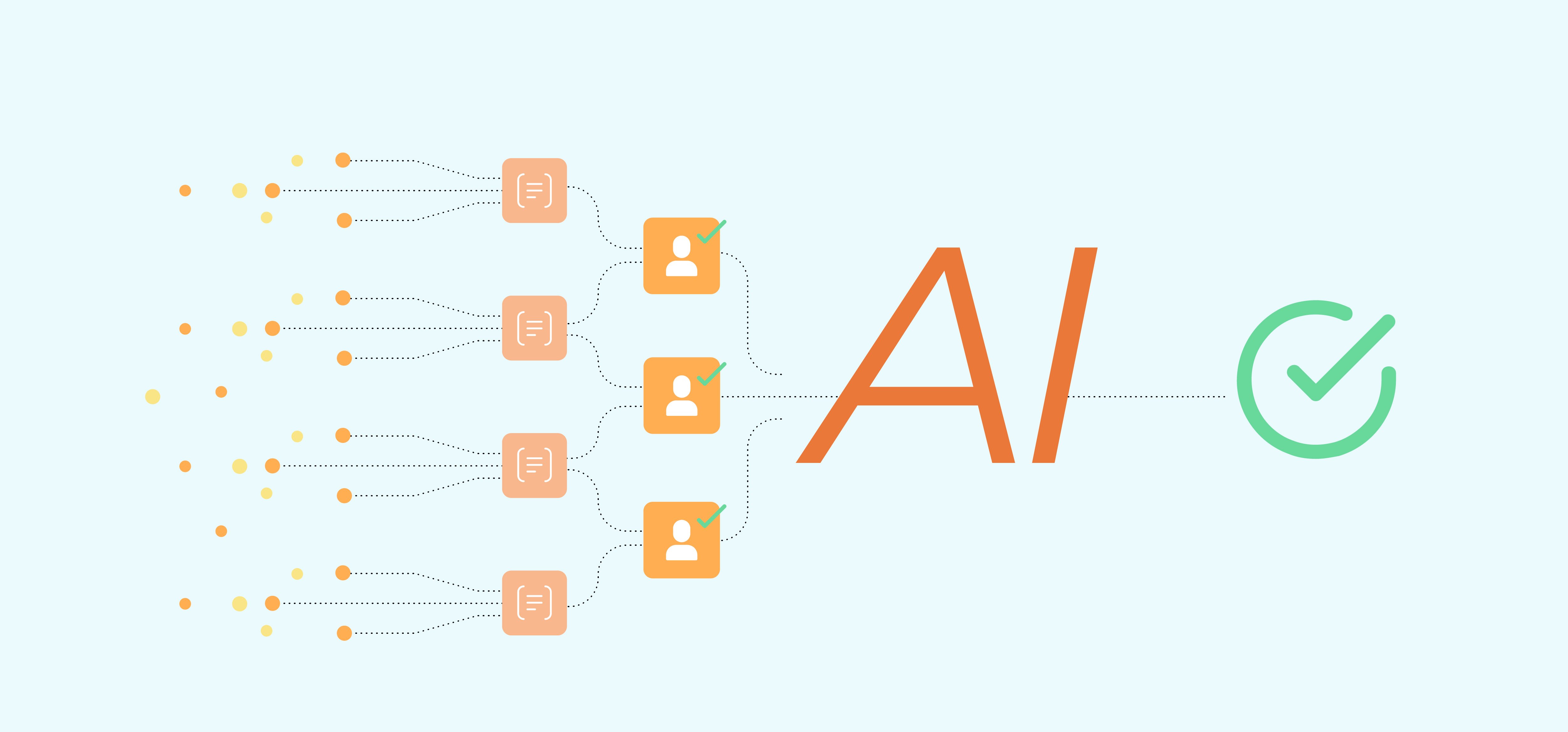
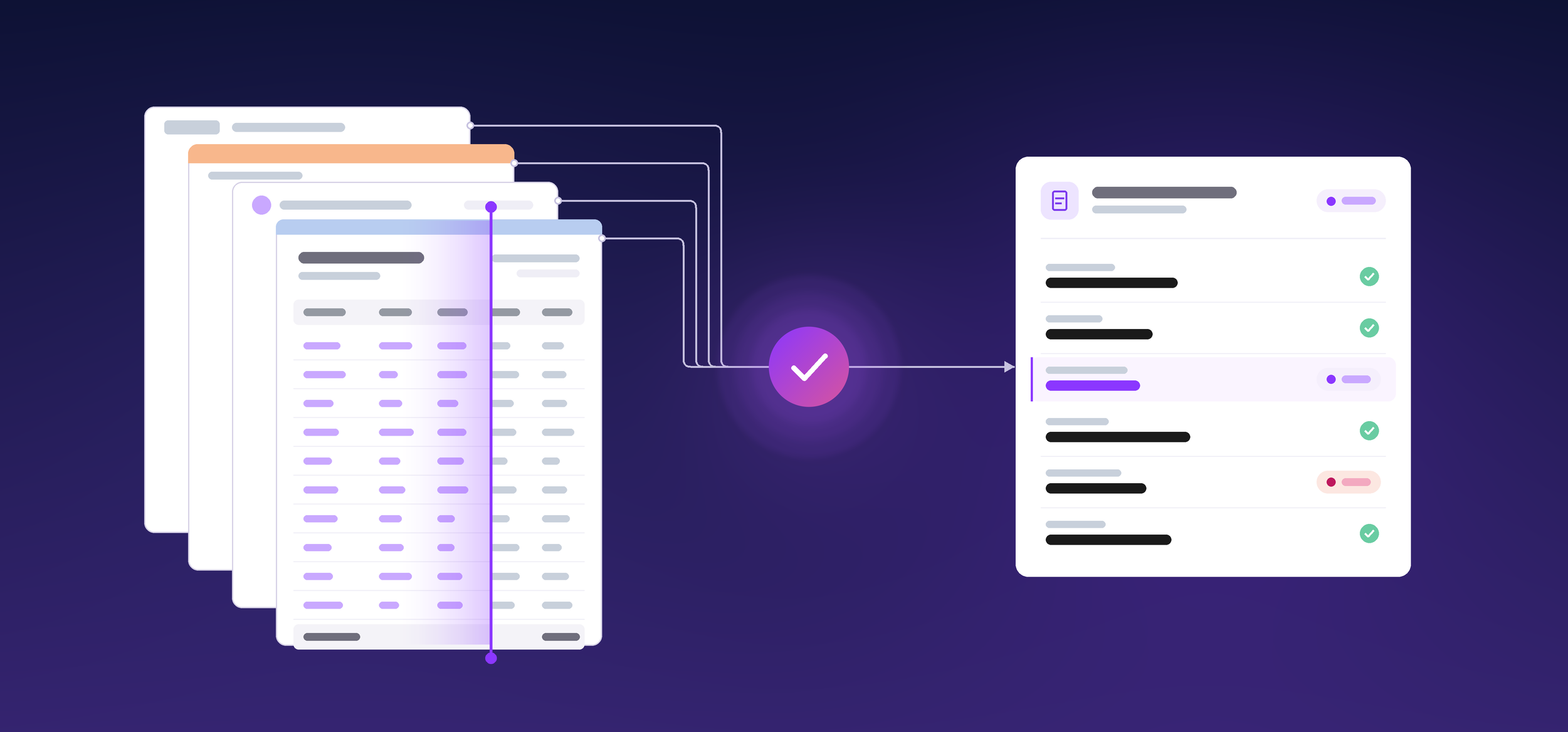
Determine where QA checkpoints sit in the workflow. Map exactly where in the workflow human review intercepts AI outputs. Set confidence thresholds that determine, in real time, which outputs the AI sends forward automatically and which it routes to a human reviewer before touching downstream systems.
When an AI agent isn’t sure, it shouldn’t guess. It should flag the record and wait. That’s what a human-in-the-loop process is built to do. The goal isn’t to have humans review everything. It’s to have humans review the right things like low-confidence outputs, edge cases, document types the model hasn’t seen at volume, and new form formats that fall outside trained parameters.
-
Run user acceptance testing (UAT) before go-live. UAT is a readiness check, not a perfection gate. The goal is to confirm the workflow is configured correctly, that human-in-the-loop routing works as expected, and that your operations team knows what to do when something lands in the review queue.
Run the model against a representative sample of your actual documents, use that process to train reviewers, surface obvious misconfigurations, and establish your baseline. Then get to production. That's where AI is actually tested.

How to Run Ongoing QA for Insurance AI in Production
Ongoing insurance AI quality assurance runs across six activities. This is where most of the real testing happens. Production is where the AI is stress-tested at volume, with real data, over time. Some run continuously. Some run on a cadence. All are necessary because no single activity gives you the full picture of whether the AI is performing the way it should. Together they form a closed loop: measure, find, diagnose, fix, validate, and watch.
-
Track accuracy and throughput together. Straight-through processing rate tells you how much the AI handles without human intervention. QA score tells you whether what it handles is correct. Both numbers need to live on the same view, because a no-touch rate that climbs while QA score drops is a warning, not a win.
Track QA score field by field, not just as an aggregate. A model can look accurate overall while consistently failing on one specific field type. That failure won’t surface until you look at that level of granularity. This is the continuous signal that tells you whether the deployment is holding its baseline day to day.
The specific metrics vary by use case. In claims, that means no-touch rate and first-pass accuracy. In underwriting, it means submission-to-quote cycle time and triage accuracy by line of business. In policy servicing, it means endorsement turnaround time and COI straight-through processing rate.
-
Run regular sampling audits. Don’t rely solely on the records that surface through human-in-the-loop review queues to understand AI performance. Those records represent the cases the model flagged as uncertain.
The cases it processed with high confidence need independent review too. Pull a random sample of AI-processed records on a regular cadence, review them against source documents, and score them against the accuracy baseline. This is where errors the model doesn’t know it’s making get caught. It’s the most fundamental QA activity in any operations context, and the one most commonly skipped.
-
Test edge cases and exception documents deliberately. Regular production volume tells you how the model performs on common document types under normal conditions. It doesn’t tell you how it performs on document types it sees infrequently or in unusual formats.
In claims, that means low-quality scans, handwritten forms, and multi-document submissions. In underwriting, that means manuscripted endorsements, non-standard schedules of values, and supplemental applications with incomplete fields. In policy servicing, that means mid-term endorsement requests with missing fields, premium audit packages across non-standard employer formats, and COI requests with unusual additional insured language.
Build a library of known edge cases drawn from real production exceptions and run the model against them on a regular cadence. This is where failure modes hide, and finding them in a controlled test costs significantly less than finding them at volume.
-
Categorize errors by type, not just volume. When sampling audits or human-in-the-loop reviews surface errors, classifying them matters as much as counting them. An extraction error (the AI pulled the wrong value from the right field), a classification error (the AI routed the document to the wrong category), and a confidence miscalibration (the AI was confident but wrong, a form of AI hallucination risk) each point to a different fix.
Treating all errors the same produces the same errors. Root cause analysis by error type is what separates a genuine insurance AI QA process from just noticing problems.
-
Run regression testing after every model update. Every model update, whether it’s a retrain on new data or a fix for a specific error type, carries the risk of introducing new failure modes while solving old ones.
Before any updated model goes to production, run it against a fixed dataset of known records with verified correct outputs. If accuracy on the control dataset holds, the update ships. If it doesn’t, it goes back. Its absence is one of the most common reasons insurance AI deployments regress after a model change.
-
Monitor for model drift as a standing check. Insurance data changes. Forms get updated. Carriers issue new document versions. New lines of business introduce document types the model hasn’t seen before. Any of these can cause a model that was performing well to quietly degrade over time. Drift shows up in review queue behavior before it shows up in accuracy scores.
When the volume of records being escalated to human review climbs without a corresponding rise in overall volume, something in the input data has shifted. Track that signal. When a specific document type starts showing elevated error rates or higher escalation, flag it, investigate, and retrain on representative data before the degradation becomes material.
These activities work together. Metric tracking provides the continuous signal. Sampling audits and edge case testing surface what metrics miss. Error categorization tells the team what to fix. Regression testing confirms the fix holds before it ships. Drift monitoring catches what all of the above might miss between cycles. The loop closes, and the baseline holds.

The difference between insurance AI deployments that sustain their results and those that plateau or regress usually isn’t the model. It’s the operating model around the model.
Strong QA keeps production accuracy high, catches drift before it compounds, routes human judgment to where it matters, and feeds learning back into performance. That work doesn’t end at go-live. For teams that take it seriously, it’s where the value starts to compound.