

A target operating model (TOM) in Property and Casualty (P&C) insurance is a blueprint for how an insurer intends to operate in its desired future state. It defines and communicates the planned use of people, processes, and technology – along with the governance needed to deliver strategic objectives. A future-state TOM is critical to an AI strategy because it defines how the organization will operate once AI is fully embedded. For example, if your strategy focuses on customer experience-oriented goals, choose AI for use cases that have the greatest impact on customer service (i.e., endorsements processing, claim setup). For prioritizing operational efficiency, consider policy summarization or regulatory filing use cases.
What Is a Target Operating Model (TOM)?
In the simplest terms, a TOM outlines how an organization works to achieve its strategic objectives – how an insurance entity will utilize people, technology, and processes to obtain the proper mix of efficiency, effectiveness, and customer service.
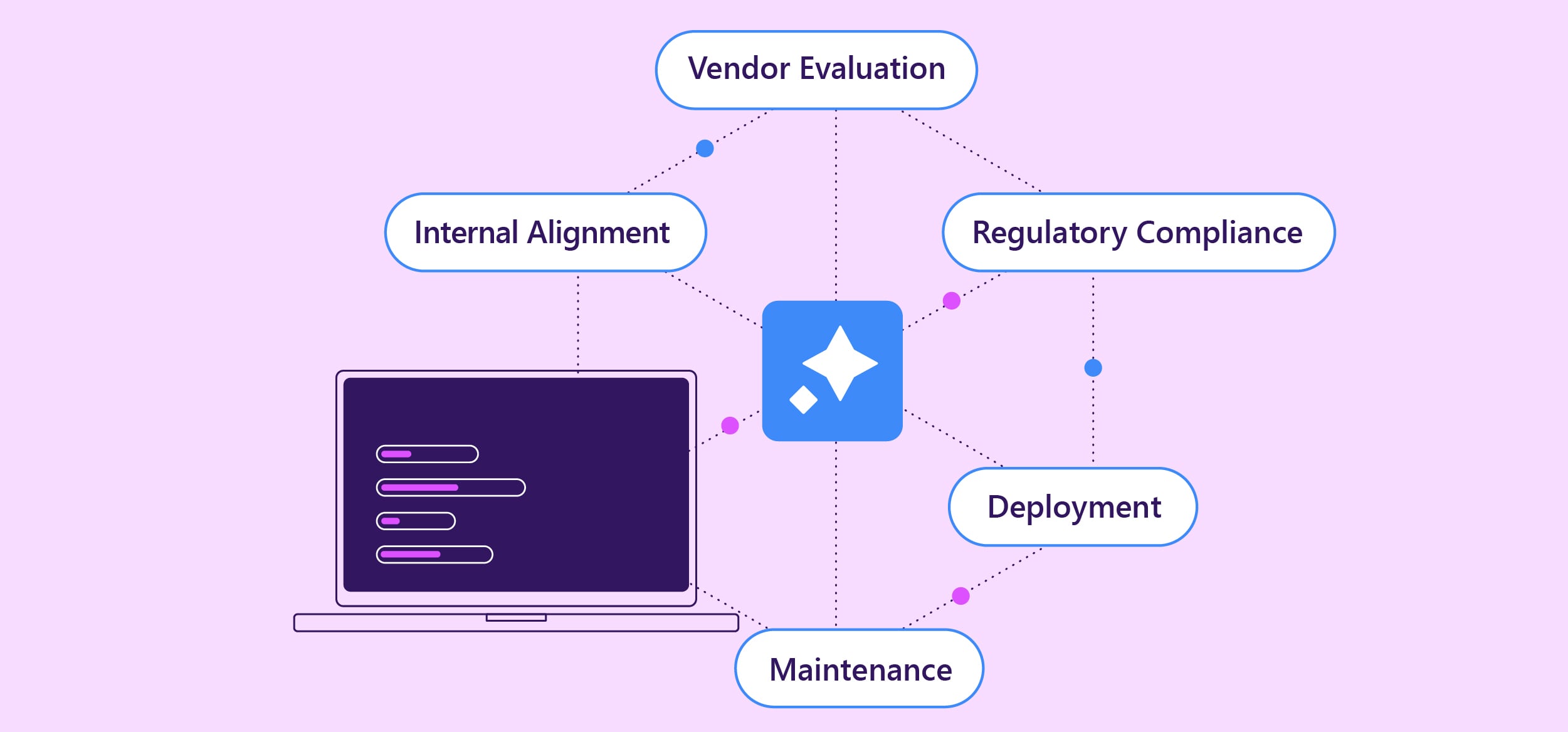
The illustration below shows the key components of a TOM.
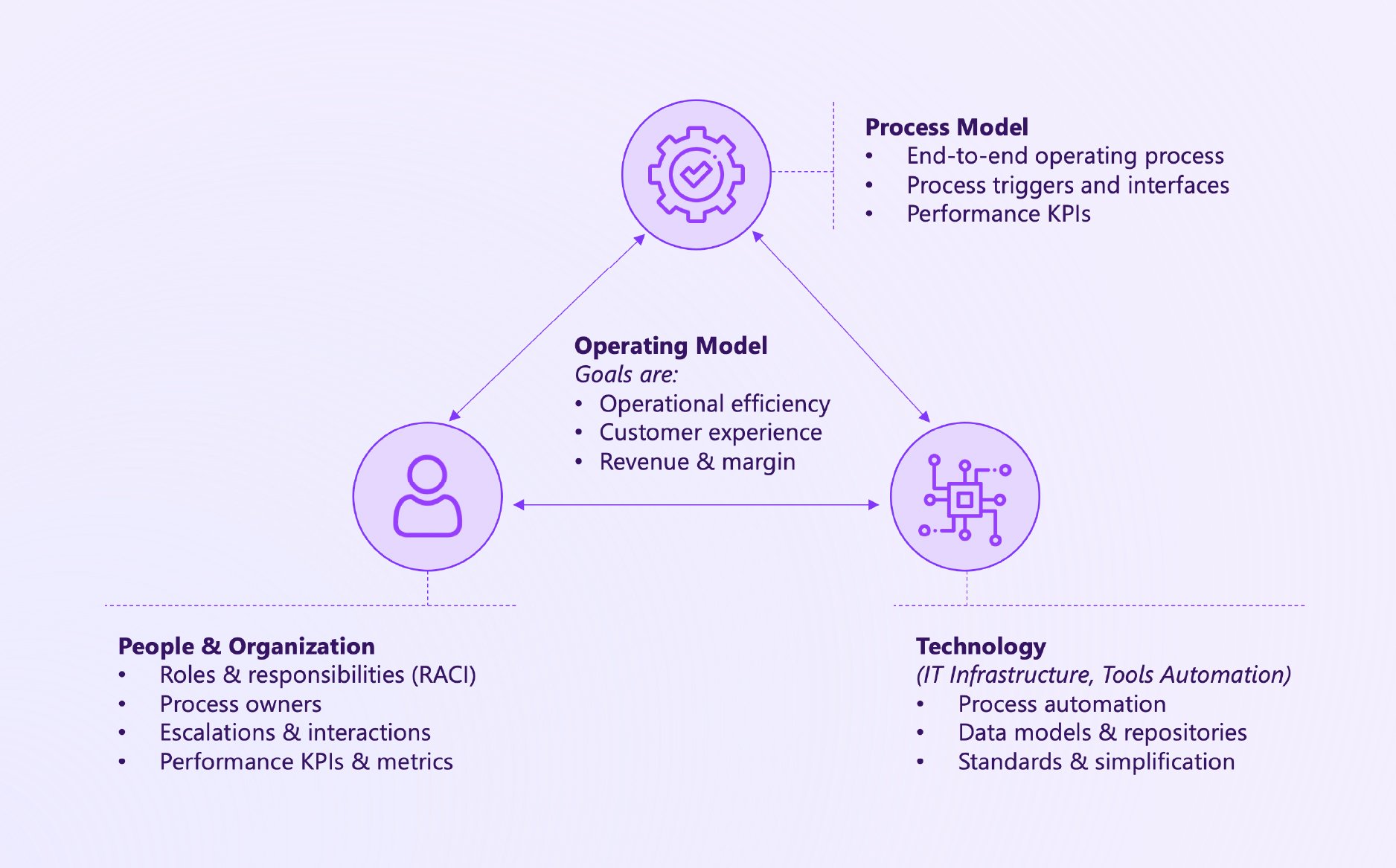
Each component of a TOM ensures AI is embedded into how the business operates rather than treated as a standalone technology initiative.
What a Target Operating Model (TOM) Is Not
Crucial as defining what a TOM is, being clear about what it is not is equally important. This is because many TOM initiatives fail because they are mistaken for narrower, tactical artifacts rather than a cohesive, enterprise-wide blueprint.
The seven distinctions below clarify how a true TOM differs from more limited documents and why that difference matters – especially when scaling AI across the organization.
1. It is not just an organization chart
-
Your TOM is not simply a diagram of reporting lines or a new hierarchy.
-
While organization design is part of it, a TOM goes beyond structure to include processes, technology, data, and governance.
2. It is not a technology implementation plan
-
It’s not just about picking systems or vendors.
-
It defines how technology supports business capabilities, but it is not a tech-only roadmap.
3. It is not a static document
-
A TOM is not a one-time deliverable that sits on a shelf for occasional reference.
-
It is a living framework that evolves as regulations, customer expectations, and technology change.
4. It is not a list of AI use cases
-
While AI use cases are part of the picture, the model is broader.
-
The TOM embeds AI into processes and governance, rather than treating it as isolated projects.
5. It is not merely a vision statement
-
While forward-looking, TOM is not aspirational but detailed and actionable.
-
It includes roles, workflows, KPIs, and controls to make the vision both real and sustainable.
6. It is not synonymous with a business strategy
-
It does not replace business strategy; it translates strategy into execution.
-
Your TOM answers the elemental question, “How will we operate?” rather than “what markets will we enter?”
7. It is not only about cost-cutting
-
While efficiency is a benefit, TOM also drives growth, compliance, and a more responsive customer experience.
-
It balances risk, agility, and innovation.
Why AI Adoption Forces a Reexamination of a Business’s Operating Model
Implementing AI in any or all operations areas forces P&C insurers to rethink their TOM by isolating and focusing on use cases that help your organization reach its strategic goals because doing so fundamentally changes how insurance work gets done, who does it, and what capabilities are needed.
Here are 7 ways a TOM enables this radical rethink:
1. Shifting from manual to AI-augmented processes
-
A traditional TOM assumes human-driven underwriting, claims, and servicing.
-
AI introduces straight-through processing (STP) for low-complexity risks and AI-assisted decision-making for complex cases.
-
To ensure a successful transformation necessitates the redesign of process maps, decisioning points, and controls.
2. Redefining critical roles and skills
-
Underwriters and claims adjusters can move from data entry and rule-based decisions to exception handling and judgment calls.
-
New roles will emerge: Data Scientists, Machine Learning Operations (MLOps) Engineers, AI Governance Officers.
-
To enable this, workforce planning and reskilling programs must become core TOM elements.
3. Changing technology architectures
-
Legacy Target Operating Models often center on policy admin and claims systems.
-
AI requires data platforms, feature stores, model registries, and orchestration layers.
-
Integration with the cloud, APIs, and external data sources becomes mandatory.
4. Elevating data as a strategic asset
-
AI thrives on high-quality, effectively governed data.
-
A TOM must embed data ownership, lineage, and quality-assurance SLAs.
-
Ownership of external data (geospatial, telematics, credit reporting, etc.) will become part of this operating model.
5. Introducing new governance and risk controls
-
Traditional TOMs focus on compliance and auditing transactions.
-
AI adds model risk management, explainability, bias testing, and ethical AI frameworks.
-
Regulatory filings now require traceability of AI-driven decisions.
6. Customer and distribution experience
-
AI enables personalized quotes, intelligent triage, and agent copilots.
-
Your TOM must support omnichannel journeys and real-time decisioning.
7. Changes in how performance is measured
-
Old TOM KPIs: cycle time, loss ratio, expense ratio
-
New TOM KPIs: STP rate, AI adoption, model accuracy, override rate, drift detection

10 Key Components of an AI-Ready Target Operating Model (TOM)
An AI-ready TOM must go beyond high-level vision and isolated technology investments. It requires a deliberate, end-to-end design that aligns strategy, execution, governance, and measurement. The components below outline the foundational elements insurers need to embed AI sustainably into their operating model – ensuring scalability, regulatory confidence, and measurable business impact.
1. An Executive Summary: This should include your vision, expected outcomes – as well as scope, timelines, and guiding principles designed by key stakeholder consensus.
2. Business Capabilities (Value Chain): Map your journey from current-state capabilities to target-state capabilities. It is critical to note the role AI will play (e.g., automation, augmentation, or advisement).
Here are some examples:
| Capability | Target State | Embedded AI Examples | Value Measures |
| Product and Pricing | Dynamic pricing with governance | Demand and elasticity modeling; scenario testing for filings | Hit ratio, price adequacy, time-to-filing |
| Distribution | Omnichannel, pre-underwriting | LLM submission parsing; agent next-best-action; STP for clean risks | Quote-to-bind, cycle time, agent productivity |
| Policy Servicing | Prioritizing self-service | Virtual assistants for endorsements; lapse/ churn prediction, premium audit | Digital adoption, average handling time (AHT), retention |
| Claims | Triaging, low-touch simple claims for handling | FNOL entry, claims indexing, claim summaries | Cycle time, leakage, recovery |
3. Processes (Mapping Future-State Workflows): Define who does what, when AI acts, and when a human reviews.
4. Organization and Roles: Clearly define ownership and accountability for both business outcomes and AI-driven decisions.
-
Operating model: Product line P&L plus shared platform teams (Data/AI, Core Platforms, Risk).
-
Human-in-the-Loop (HITL): Clearly define the business rules, confidence scores, and override logging/sampling reviews.
5. Technology Architecture: A layered reference architecture with nonfunctional guardrails defining how an AI system works, rather than its specific function.
6. Data and Analytics: A clear data strategy and a governance plan.
7. AI Governance and & Risk Management: Document the model life cycle. Use‑case intake → data approval → build → independent validation → “Champion/Challenger” model testing → deployment → monitoring → periodic re‑validation.
8. Performance and KPIs: Gain stakeholder consensus on which KPIs to track (e.g. business impact, model health, adoption rate).
9. Create a Binding Phased Implementation Roadmap: Include dependencies and concrete milestone for core modernization, data contracts, vendor onboarding, regulatory filings, etc.
10. Assess Risks and Mitigations: These should focus on:
-
Bias/fairness Regulatory non‑compliance
-
Data quality
-
Change fatigue
Having a cohesive, AI-ready TOM for P&C insurance provides a critical framework for resilience and adaptability.
Industry Examples of Target Operating Models
A TOM balances the decisions carriers make to optimize operational performance in specific areas. For example:
1. Companies seeking to improve customer satisfaction levels would orient their operating model to prioritize customer service.
2. Companies seeking to “win” on price (i.e., more discounts, lower rates) would orient their strategy toward efficiency to create “leaner” operations.
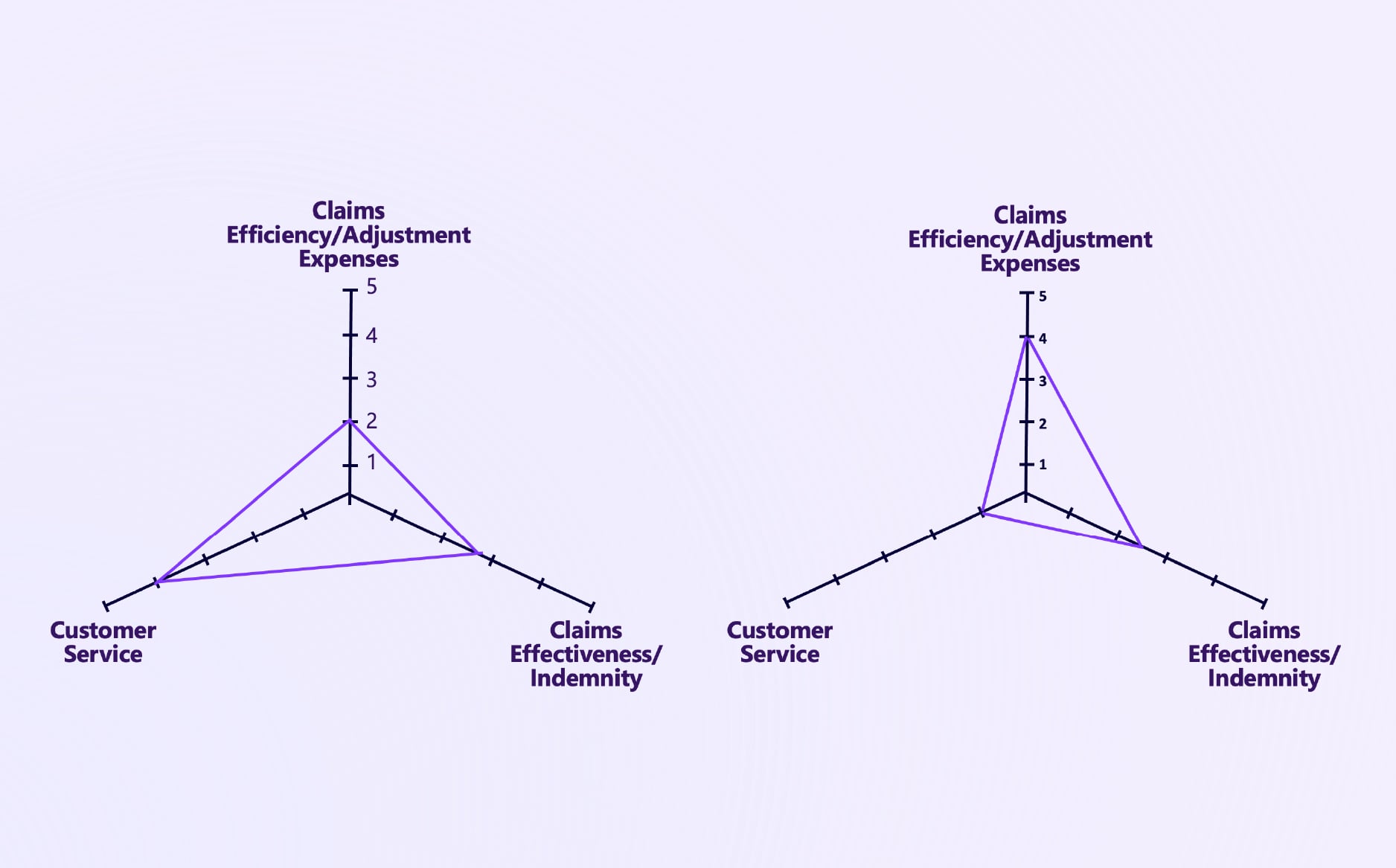
A TOM with AI embedded in it can empower insurers to thrive and deliver class-leading service in all market conditions. For example, in a hard market, an effective TOM drives AI adoption for underwriting workflows and governance to enforce consistent risk appetite. During soft markets, an AI-first TOM maps your capabilities to deliver STP for low-complexity risks, reduce cycle time, and provide AI-powered personalization to improve conversion and retention.
Beyond navigating market conditions, a TOM is your organization’s blueprint for creating conditions to support uninterrupted business success.